| |

Home
Thousands of tastings,
all the ramblings
and all the fun
(hopefully!)



Whiskyfun.com
Guaranteed ad-free
copyright 2002-2026
|
 |
|
| Hi, this is one of our (almost) daily tastings. Santé! |
| |
|
| |
| |
April 1, 2026 |
|
  |
Tasting Malt Mill,
once more
Well, this is rather something. One had thought that the era of miraculous old-whisky discoveries, dusty Springbanks behind coal bunkers, pre-war blends under chapel stairs, forgotten flagons in Highland solicitors’ cupboards and the like, was now largely behind us.
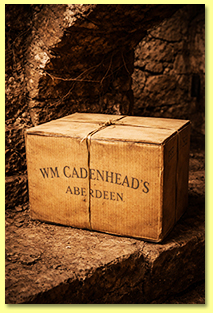
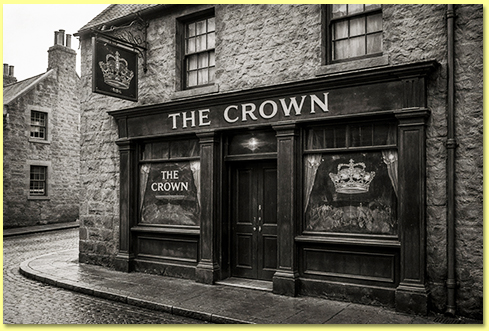
And yet, here we are. A full case of six bottles of Malt Mill 1959 has just been discovered in the cellar of an old pub in Aberdeen, closed for at least thirty years and, one suspects, not exactly maintained in expectation of future archaeological interest. Quite how the case survived untouched for so long is anyone’s guess. Perhaps nobody knew what it was. Perhaps everybody knew exactly what it was. In whisky, both explanations are equally plausible. |
|
 |
|
The condition is nothing short of remarkable. The labels are beautifully preserved, the twist caps reassuringly intact, and while the levels are a little low (roughly top shoulder) one would be inclined to call that entirely honourable for bottles of this age. Frankly, if they had all been into the neck, one might have started worrying for entirely different reasons. Now, the truly delicious part: there are increasing indications that this Malt Mill 1959 may never actually have been commercially released. Not “very rare”, not “hard to find”, not “only seen in Japan in the early 1980s”, but possibly never released at all. Which would place it in that most dangerous of categories: whiskies that make collectors weak at the knees, auctioneers strangely lyrical, and otherwise sensible adults start using words such as “unicorn” without irony. |
The story, as relayed by the heirs of the late publican, is that the case had lain undisturbed in the pub’s lower cellar for decades, in the company, one imagines, of mouldy ledgers, dead spiders, a few heroic cobwebs and perhaps the occasional regrettable bottle of 1970s advocaat. One bottle was eventually opened, and one can only hope this was done with the appropriate combination of reverence, greed and panic, and a sample was sent forthwith to Whiskyfun for evaluation. And naturally, we sprang into action with our usual sense of selfless amateurism. Some burdens one simply has to bear. |
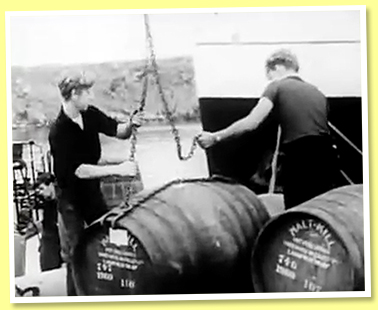
Casks of Malt Mill being loaded onto the puffer 'Pibroch' in the late 1950s or very early 1960s. Screen capture from a stunning documentary from Scottish Television. Check '
Islay Whisky Island Documentary' on YouTube. |
 |
As for the five remaining bottles, it would be foolish to pretend that one could estimate their market value with any serious confidence. Ghost distillery, 1959 vintage, immaculate provenance, possible unreleased status, and a story involving a shuttered Aberdeen pub? Frankly, the only honest valuation at this stage is: too much. Still, do keep an eye on the auction houses over the coming months, where one suspects these survivors may soon reappear beneath flattering lighting, breathless catalogue prose and estimates designed to make one briefly reconsider the utility of internal organs. |
But all that can wait. The important question, as always, is not how much it might fetch under a hammer, but whether the old beast still has it where it counts.
Let’s see. |
|
|
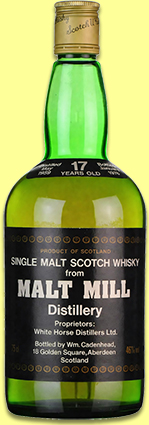
Malt Mill 17 yo 1959/1976 (80° proof UK, Cadenhead, Black Dumpy, green glass) 
A very smoky old ghost, from the kingdom of old-style peat and impossible things. The only other Malt Mill we've ever tried was a miniature of another 1959 from James MacArthur, in 2018 (WF 91). Colour: deep old gold, bordering on polished walnut and antique Sauternes. The hue of a forgotten violin, a chapel candlestick, or some priceless liqueur that has spent half a century avoiding vulgarity. Nose: extraordinary. Not merely smoky, cathedrally smoky. This is not peat as a flavouring, nor even peat as a style marker; this is peat as architecture, as weather, as ancestral memory. One is immediately confronted with old kiln smoke, damp coal cellars, soot-blackened stone, hessian sacks, paraffin, camphor, embrocations, old fisherman’s jumpers, and the smell of extinguished turf fires after Atlantic rain. Then it unfolds, and unfolds magnificently. Smoked walnut oil, black olives in brine, tarred ropes, antique toolboxes, cigar humidor, old books left in a seaside rectory, dried kelp, iodine, and the faint medicinal whiff of a 1950s chemist’s shop. There’s also that magnificent old-whisky paradox: beneath all the smoke and oils, an almost indecent elegance. Beeswax. Furniture polish. Crystallised orange peel. Tiny raisins. Seville marmalade on rye toast. Bitter chocolate infused with lapsang souchong. With time, it becomes almost absurdly complex. Charred rosemary, graphite, eucalyptus, shoe polish, smoked chestnuts, bouillon, truffle peelings, and then, from nowhere, tiny high notes of old yellow Chartreuse, preserved lemons, verbena, and dried mint. It is as if some forgotten Victorian apothecary had been set on fire in the most civilised manner possible. |
With water: utterly majestic. Water does not diminish it; it liberates it. The smoke becomes more mineral, more chiselled, more coastal. Wet slate, crushed oyster shells, kippers in a silver dome, old engine oil, beach bonfire ashes, and a little coal dust. One also finds lanolin, sheep wool, and old tweed drying near a peat hearth. It gains a stunning “old Islay library” profile, if such a thing exists, and if it does, one would very much like the keys. Mouth (neat): oh, this is monumental. The arrival is dense, oily, and almost shockingly alive for such an old spirit. It doesn’t so much land on the palate as march across it in military boots dipped in tar. Enormous peat smoke, naturally, but not simple phenolic aggression, rather an old-world, resinous, earthy, medicinal peat, with astonishing tertiary depth. Tar liqueur, bitter herbs, black tea, old Pu-erh, cough syrup, liquorice root, clove cigarettes, pine resin, walnut skin, and salted liquorice all arrive in waves. Then come salted lemons, anchovy paste, bouillon, tobacco leaf, cracked black pepper, old leather, and smoked game. One keeps expecting the old age to have sanded away the structure, but no, it is still standing ramrod straight, like an elderly admiral who can still outdrink everyone in the room. And then, because whiskies of this sort are never content with one register, it begins to show little flashes of fruit and nobility: quince jelly, dried apricot, blood orange, over-steeped bergamot tea, and perhaps a touch of mango chutney gone gloriously savoury. There’s also a faint earthy sweetness, molasses, dark honey, pipe tobacco, but every time sweetness threatens to become central, the smoke returns and politely but firmly restores order. With water: a total old peat opera. It broadens and deepens, becoming even more saline, earthy, and medicinal. Camphor, eucalyptus lozenges, smoked tea, coal smoke, dried seaweed, and old-style herbal bitters. There is also a glorious umami side now, mushroom stock, game jus, smoked soy, marrow broth. One could almost eat this with a spoon, though that would probably be sacrilege. It also turns more “mechanical” in the noblest old-whisky sense: copper coins, mineral oil, old toolbox, warmed Bakelite, and a suggestion of antique machinery in a damp warehouse by the sea. Which sounds preposterous, but there it is. Finish: very long. In fact, almost suspiciously long, as if it had no intention whatsoever of leaving. The peat persists in dignified, old-fashioned layers: ash, coal smoke, tar, black tea, salted liquorice, menthol tobacco, and embers dying slowly in wet wind. A little citrus bitterness remains too, grapefruit pith, marmalade, preserved lemon , along with walnut oil and a final whisper of medicinal herbs. The aftertaste is gloriously old-school: smoky, dry, oily, slightly bitter, faintly salty, and profoundly aristocratic in its refusal to flatter. Comments: this is not simply a great old smoky whisky. It is one of those spirits that seem to have escaped from another civilisation altogether, one where malt was dirtier, peat was louder, warehouses were colder, and nobody had yet thought to make whisky “approachable.” It is gloriously uncompromising, deeply tertiary, and utterly haunting. There is a kind of grandeur here that modern peat almost never reaches: not just smoke, but old smoke, layered with waxes, oils, herbs, medicines, salts, books, cellars, and all the glorious detritus of age. A whisky that smells and tastes like memory set on fire.
Not for everyone, naturally. Which is exactly why it is so wonderful (Serge!).
SGP: 478 - 97 points. |
|
|
| |
|
|
|
|
|
|

