| |

Home
Thousands of tastings,
all the ramblings
and all the fun
(hopefully!)



Whiskyfun.com
Guaranteed ad-free
copyright 2002-2026
|
 |
|
| Hi, this is one of our (almost) daily tastings. Santé! |
| |
|
| |
| |
January 3, 2026 |
|
  |
|
Angus's Corner
From our correspondent and skilled taster Angus MacRaild in Scotland
Illustrations, Darius Pronowski
Whisky and terroir:
Part Three and last |
 |
|
|
Terroir is a useful way to think about whisky because it acts as a challenge to the official industry consensus about itself, about its product and about its history. Scotch Whisky is commercially dominated by blends, but it is underpinned by malt whiskies. We are told time and time again that if it wasn’t for blends there would be no malts etc. But is that true? Is there any reason, if the 1909 Royal Commission had gone the other way and found in favour of the Distillers, that a different kind of industry, one perhaps more like what happened with French wine, might have evolved? It’s impossible to know, but I believe that the secondary industry that is emerging today, largely consisting of smaller, independent distilleries intent on doing something different to the mainstream industry, is perhaps, finally, an indication of what has always been possible with Scottish malt whisky. Not everyone in this emergent wave of distilleries adheres to a philosophy of terroir, but almost everyone borrows some of its adjacent ideas and language – everyone wants to talk about, and demonstrate, local, sustainable, quality, individuality etc. |
|
|
|
|
|
In the same sense, it is useful to really think about it technically. The argument against terroir existing in whisky is often underpinned by a focus on distillation, on its violence and the hot, turbulent nature of the process. But these arguments often frame distillation as a process of deletion, when it is really one of concentration. Is the collective weight of ingredient and site-specific characteristics truly muted by the distillation process? Or is it instead narrowed and focused? Certainly, in the pot still, I would argue that a lot of the collective character of ingredients and process up to that point are born beyond those fiery copper necks. I would argue that the greater hurdle for terroir character, and for site-specific distillery character, is wood. Wood is potentially the true agent of muting and obfuscation - if not necessarily total deletion. |
|
|
If you want to truly embrace terroir, you should really be embracing and using totally plain, refill, neutral wood. Wood should be as uniform and deferential to distillate as possible. As yet, no one has done this, probably because it would be commercially impossible. Terroir is a wonderful idea, but to truly put it into practice, to really cleave utterly close to the implications of the philosophy, would be an impracticality too far for most distilling businesses. What begins as a marketeer’s dream, becomes a salesperson’s nightmare at the business end. This is something evidenced by Waterford: noble ideas expressed in many, many good bottlings that were a challenge, ultimately, to sell. |
|
|
A final consideration about terroir, is the ‘people’ component. Ten years ago, I wrote this piece about whisky and terroir, with a particular focus on people. Broadly, I argued that whisky’s disconnection from the land over the 20th century, mirrored the distancing of Scottish people from their land. I think I still agree with what I wrote. It’s hard to dispute the idea that we are estranged from the physical land in which we live; the Scotland in which Scotch Whisky is made indisputably exerts less influence on the character of those whiskies than it did a century ago. |
|
|
Herein lies another challenge for embracing terroir in Scotch Whisky. We aren’t out physically tending the barley over the season, harvesting it by hand and then immediately commencing production. Ultimately, even if local barley is used, it’s a rather distant process: large scale, commercial, agricultural, industrial, broken up in odd chunks of time. Modern people are almost entirely disconnected from the land around them, and modern whisky production is often far removed from the individual human scale. Multiple layers of separation exist and must be overcome for terroir to start to ring true in Scotch Whisky, especially when compared with modern wine growing and making practice. |
|
|
|
|
|
To overcome these obstacles, to strip away these distances, we come back to conscious decision making. The frequently expensive and uncommercial deliberate decision making to force the land, the human workers and the method of manufacture into closer proximity in a manner which is clear and makes intellectual and technical sense. It’s a hard thing to do, to truly achieve this you have to pass through a minefield of potential gimmickry and come prepared to counter the pessimisms of your audience. One of terroir’s greatest stumbling blocks is the cynicism that confronts it. Ultimately – most critically - you also have to come up with something tangible and credible to show why it was worth it. |
|
|
I would argue that those obvious challenges surrounding its meaningful, and successful implementation in Scotch Whisky, are one of the strongest arguments for why it is a good idea. We live in age where there’s an abundance of whisky, more of the stuff than ever is bottled as single malt and there’s never been such a tyranny of choice or wide selection from which the drinker/collector can choose. The trouble is, so much of it is boring, the age of abundance is also the age of mediocrity. Any serious, quality-oriented, differentiated approach to breaking free of this mediocrity vortex is vital and to be lauded and supported. Terroir, in my view, is not about the obsessive, scientific burden of proof over whether and to what extent it exists; it’s a philosophy that provides useful approaches for modern whisky making and a means to produce characterful, distinctive, high-quality whiskies that stand necessarily apart from the masses. Yes, like all products, a commercial balance must be struck, they have to be correctly (often cleverly) marketed and sold, but it can provide a bedrock of something different and interesting that goes beyond the standardised modern malt whisky playbook. |
|
|
Ultimately, I would argue that achieving meaningful differentiation is going to become ever more important in the coming years. This past year, it has become utterly clear that Scotch Whisky is not in a happy place. I see it in my day-to-day work as an independent bottler, and I hear about it from colleagues across ever sector of the industry. There are going to be some very difficult years ahead for whisky and I believe authentic distinctiveness will become a great asset of durability for whisky businesses. In short: if you’re boring, you are more exposed. |
|
|
I think back to my trip to Orkney earlier this year and about what has happened in the intervening months. I’ve since heard that Scapa have been quietly buying up and distilling with a lot of Orkney Bere barley. I’ve had the chance to visit Brora and taste their very impressive new make. I’ve still yet to make it up to Glen Garioch to visit their post-refurbishment floor maltings and direct fired stills – but I think it’s telling that they did this. At time of writing, some of the larger industry players are starting to sell a lot more whisky at much cheaper prices. Things feel like they are changing quite quickly, and there are signs of admission through action from larger companies that things like quality, approach and pricing needed to change. |
|
|
Terroir is just one approach to making whisky, and not an easy one. It is one which provides a strong intellectual basis and set of approaches that, sensibly deployed, can deliver distinctiveness and quality. That’s why it’s interesting, that’s why it matters and that’s why I think it is important to give practitioners a chance and a hearing when they decide to go down that path. Ultimately though, while it is intellectually fascinating if a distillery business can demonstrate that their whisky expresses terroir, I believe it is of greater importance (for the industry and for the drinker) that it possesses high quality. The most successful pursuit of terroir is one that binds it together with quality. |
|
|
|
|
|
Orkney was something of an emotional trip for me. It was a trip we’d originally planned to take with my Dad. He had always wanted to see Orkney, but cancer and Covid had other ideas. In the end it took us five years after he passed away to make the journey up there. Life looks very different now, with two young children and so much having changed in those intervening years. Our kids had a wonderful time on Orkney. That confrontational awareness of the impermanence of all things that Orkney delivers, alongside the joyfulness and innocence of young children playing outside and becoming aware of nature, is a heady cosmic potion to consume. At night the wind would rally and tear about the cottage we were staying in, I would step out into that howling darkness until it stung. It is possible to understand in those moments why the farther flung parts of these Islands are called ‘thin’ places, where the distance between the living and the dead grows narrow to the point of perforation. It’s a place and feeling that can deliver an indescribable sense of calm. It’s also a physical situation and state of mind which makes the whisky in your glass taste so unbelievably fucking good. |
|
|
That would be my one final point about why terroir matters, feelings of relation and belonging to the land grant whisky an emotive power. Without that sense of emotional resonance, whisky is meaningless to me, just hot alcohol. My lifelong passion and love for this drink is underpinned by emotional ley lines of connection that lend it meaning. I am certain that’s the case for many of us. Those lines of connection can feel severed by mediocrity and modern whisky’s more vulgar traits, just as they can be invigorated by the beauty and social pleasures of this drink. The endeavour to make room for terroir in whisky, even just one firm root into the land, also creates space for these types of meaning, connection and emotion that clinically efficient manufacture can never hope to match. |
|
|
Angus MacRaild for Whiskyfun |
|
|

|
The Time Warp Sessions,
today’s indie Glen Moray span nearly 50 years |
It’s no secret, we love Glen Moray, and every chance to enjoy it is a golden opportunity. The brand played a major role over twenty years ago by offering whisky lovers a truly good single malt that was ‘a little cheaper than others’, but no less delicious! This time, we’re tasting two independent bottlings, one of which is quite rare and something we’ve always wanted to try. Today is the big day.
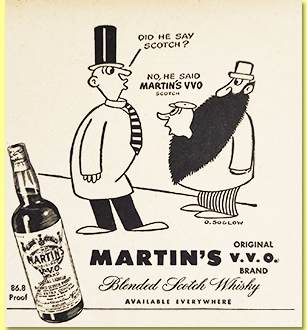
(Glen Moray was the main supplier of malt for Martin's blends, including the renowned VVO, which was very good - WF 84.) |
|
|
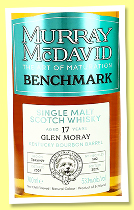
Glen Moray 17 yo 2007/2025 (53.1%, Murray McDavid, Benchmark, Kentucky bourbon barrels, casks #5844+48+51, 582 bottles) 
Colour: pale gold. Nose: a whiff of very young chardonnay from a brand-new barrel right at first, then the whole thing falls neatly into place with orange sponge cake, ripe banana, vanilla cream, Golden Grahams, café latte and just a few cubes of mango thrown in for good measure. It’s simple, but that’s what makes it perfect. Light muesli. With water: a welcome touch of tension appears by way of some herbs and a few apple peelings. Mouth (neat): very, very good, creamy, with Lagunitas beer and banana-lemon cream. To tell the truth, this stuff is rather lethal... With water: lovely energy and brightness, citrus, passion fruit, vanilla, a trace of fresh oak, some quince jelly, and even a few jellybeans... Finish: good length, with a drop of acacia honey and a little chamomile. Nothing to add. Comments: strictly between us, one can’t help thinking of a very good young ex-bourbon Balvenie. And the Kentucky side of the barrels is clearly showing. Just joking.
SGP:641 - 87 points. |
|
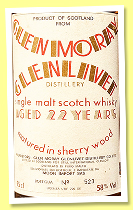
Glen Moray Glenlivet 22 yo (58%, Moon Import, first series, sherry wood, 600 bottles, early 1980s) 
No doubt a vintage from the very late 1950s or the very early 1960s, in the lineage of those magnificent official bottlings from thirty years ago. It’s important to remember that Moon, aka Sig. Mongiardino, was a true pioneer, alongside Silvano Samaroli and Eduardo Giaccone, including in the world of rum. Colour: gold. Nose: that combination of tobacco, chalk and dried fruits (including walnut) is absolutely splendid, and one gets the impression this came from a genuine old oloroso or amontillado ex-solera butt, or at the very least an ex-transport cask, with the wood itself having minimal impact—quite different from the feel of today’s casks made specifically for the whisky industry. In short, this is a dry sherry of stunning beauty, utterly classic, utterly elegant. With water: a touch more mineral now, with fresh cement, clay, and even a few fresh mint leaves... Mouth: magnificent, on tobacco, bitter oranges, mustard and walnut. With water: more of the same, plus some honeys, chestnut purée and black tea. It’s fairly compact, but that’s what makes it perfect. Finish: long, slightly more peppery, but with restraint. A touch of bouillon and miso soup in the aftertaste. Comments: not the faintest trace of OBE here, unless that slight stock cube note right at the end counts.
SGP:562 - 92 points. |

|
Serge's Non-Awards
2025 was another excellent year in terms of the quality of ‘enthusiast-grade’ whiskies worldwide, even if the economic figures weren’t particularly encouraging. Many distilleries from the rest of the world (ha) have made progress, and the Scots continue to produce great things, even though the trend of disguising malts with improbable casks hasn’t really slowed down—unlike the modest NAS whiskies, which seem to be a little less numerous. |
As for cognacs and armagnacs, small producers and independent bottlers are leading the way and seem to be winning over more and more whisky lovers—especially as they still cost two to three times less for equivalent quality. That said, malt whisky prices seem to be coming down. |
Favourite recent bottling |
|
|
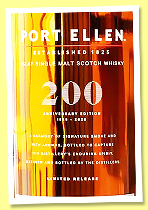
Port Ellen 42 yo 1983/2025 (56.4%, OB, 200th Anniversary, 150 bottles)
WF 95
Port Ellen has consistently held first place year after year; in 2024, it was the 44-year-old ‘Gemini’ that won. Given the quality of certain older 10-year-olds—not to mention the famous ‘Queen’s Visit’—we are now looking forward to discovering the very first releases from the new Port Ellen distillery. |
|
|
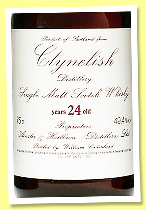
Clynelish 24 yo (49.4%, Cadenhead, Sestante, +/-1989)
WF 98
The old Clynelish distillery, of course—though in a version that even the importer/bottler has deemed controversial. Legitimate or not, it remains our favourite, and that's not just for the sake of being contrary. |
Favourite bang for your buck |
|
|
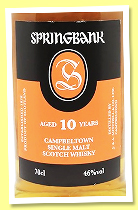
Springbank 10 yo (46%, OB, +/-2024)
WF 91
Nothing more to add. Talisker 10 and Ardbeg 10 aren’t far off in this category. You have to turn to much older and more prestigious versions to match the incredible standard of these ‘entry-level’ whiskies that fear neither man nor beast.
|
|
|
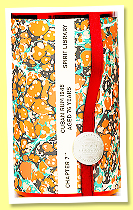
Cuban Rum 76 yo 1948/2025 (48.9%, Chapter 7 Ltd, Spirit Library for Figee Fine Goods Switzerland, 108 bottles)
WF 95
To our great surprise, these very old pre-revolution Cuban rums—often offered at relatively reasonable prices—manage to hold their own against the stars of Jamaica, Guyana, or the finest agricoles. I hope there are still some left... |
|
|
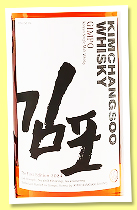
Kimchangsoo ‘Gimpo - The First Edition 2024’ (50.1%, OB, South Korea)
WF 90
A magnificent little distillery that releases very few casks, but whose style and complexity—despite its young age—are truly impressive. We could of course also have included some Nordic producers here, along with a few other young distilleries around the world that are exceptionally deserving. |
|
|
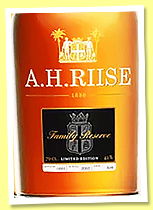
A.H. Riise ‘Family Reserve Solera 1838’ (42%, OB, Virgin Islands, +/-2024)
WF 15
These insanely sweet sugar bombs—like certain Colombian rums or very liqueur-like ones from the Dominican Republic—really aren’t for us. Granted, using massive amounts of ice tones down the sickly-sweet effect on the palate, but here, we taste at room temperature. Go on then, you’re going to say it’s our fault… |
|
|
| |
|
|
|
|
|
|

