|
 |
| Hi, you're in the Archives, April 2026 - Part 1 |
| |
| |
| |
April 13, 2026 |
|
  |

|
|
WF's Little Duos,
today just some small extra drams of Highland Park |
Always a pleasure to enjoy a quick taste of Highland Park (rather an unnecessary introduction, S.) |
|
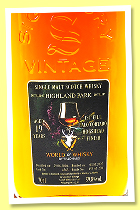
Highland Park 19 yo 2006/2025 (59.8%, Signatory Vintage for World of Whisky by Waldhaus, 1st fill palo cortado finish, cask #4563, 250 bottles) 
The question remains, is it better to have a full maturation in second fill or a finishing in first fill? Answer on a postcard, please. In any case, we do love palo cortado, here it feels like a proper solera butt! But we have no proof of that, I grant you… Colour: full gold. Nose: HP and a good sherry, they always tango to perfection. Here there is truly plenty of shoe polish, church candles, walnut skins, almond milk, curry and sourdough. All in all, a very natural side. With water: we go down to the cellar, with old hessian sacks, saltpetre, mushrooms, discreet moulds, coal… Mouth (neat): it is very rich, yet very dry, with very fine bitters, somewhere between Noilly-Prat and Fernet-Branca. All that is missing are scallops. With water: herbal, dry, green walnuts, tobacco, asparagus, and still that Noilly… Finish: long, saline, samphire, shellfish, then a little dance of mustard and green walnut. Comments: for lovers of very dry sherry, of which we are of course part. Well done Waldhaus (alliteration alert!)
SGP:362 - 89 points. |
Which brings us neatly to a refill… |
|
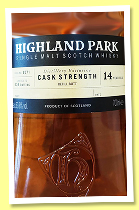
Highland Park 14 yo (63.8%, OB, Distillery Exclusive, refill butt, cask #6571, 638 bottles, +/-2022) 
Cask strength, really? Colour: deep gold. Nose: different, yet not so different after all, rounder, more on shoe polish, but after two minutes they converge rather seriously, to the point where we are no longer quite sure who is what and what is who. This one is just a little spicier, but that is no doubt the fairly higher strength all the same. With water: no, the Waldhaus dominates it on the aromatic complexity front. Mouth (neat): it hits a bit at these strengths, but beyond that it is clearly a powerful HP in style, herbal, perhaps a little brutal. With water: let us say it, it is very good, it just remains a little basic, only the very marked salinity adds some edge. Finish: long, herbal, narrow, austere. Comments: a very lovely bottle, but the Waldhaus really dominated it. Such are the joys of comparative tastings, they can be merciless.
SGP:361 - 83 points. |
|
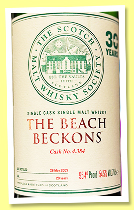
Highland Park 20 yo 2003/2024 (54.5%, Scotch Malt Whisky Society, The Beach Beckons, #4.384)
I think this is a bottling for the SMWS Switzerland. Great guys! Colour: gold. Nose: it is on grape marc, lawn, hay, husk and wort, it needs water… With water: pencil lead. It is much prettier than it first appeared. Mouth (neat): very green, austere, dry, still on lawn, then lemon and cider apple. With water: it remains tight, a little herbal, a little on cedar wood, but it is very pleasant. Finish: long, a little woody. Comments: we do not think it is conceivable to taste this very lovely baby without water. It is often the case that malts are literally transformed by the addition of a little water, but here it is rather spectacular. 80 -> 84 points.
SGP:362 - 84 points. |
| |
April 12, 2026 |
|
|
A couple more cognacs
We’re simply carrying on as before, beginning this new session with the traditional ‘old-style’ apéritif, from a house that seems to be relatively little known…
|
|
 |
|
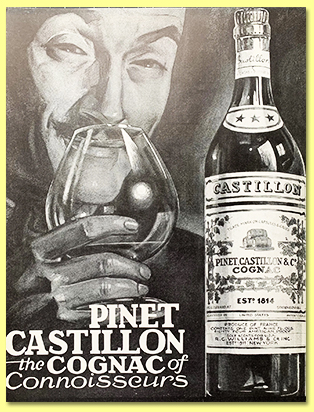
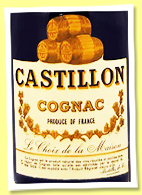
Castillon ‘Le Choix de la Maison V.S.O.P.’ (40%, OB, Fine Champagne, 1960s) 
A brand that had been absorbed by Renault cognacs in the 1960s, which was later acquired by Pernod Ricard via Bisquit in 1991, before being transferred to new Finnish owners. As such, Castillon, aka Pinet Castillon, disappeared in the 1970s. Let us taste it. Colour: copper. Nose: a charming nose, very traditional, between sultanas, iris, a touch of black earth and the familiar well-ripened peach. Very slight menthol. Hardly any OBE here, it has remained lively like a dace, or almost. Mouth: same impressions, rather full-bodied, with light bitterness that remains fairly noticeable, a faint pine resin side that could be typical of a ‘taste of glass’, yet the base of fruitcake, raisins and orange zest has stayed firmly in place. Finish: long and curiously peppery. Comments: there is no doubt a touch of Old Bottle Effect, yet it has remained truly charming and nicely full-bodied, should you ever come across a bottle at auction… Besides you can indeed find very old vintages of Castillon, 19th century and so forth.
SGP:451 - 80 points. |
Shall we move on to the moderns? |
|
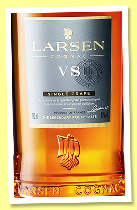
Larsen ‘VS’ (40%, OB, Single Grape, +/-2025)
Pure ugni blanc. All distillers in the world do love to use the word ‘single’ at the slightest opportunity, do they not? Colour: gold. Nose: this is very gentle, soft as a lamb, or rather like acacia honey enriched with a little natural vanilla, before apricot and wafts of broom come along to join the party. Very light touches of eucalyptus, most pleasant. Mouth: no one could object to this light, fresh, floral palate, though it then moves more towards slightly burnt nuts and black tea. The somewhat feinty and spirity side suggests that this is nonetheless a very young cognac. Finish: rather short, softer again, with fruit juices, apple and then pear, for instance. A touch of quince eau-de-vie as a signature. Comments: we rather like these very young cognacs that are probably more often enjoyed in cocktails. Truly, we do like this.
SGP:541 - 80 points. |
|
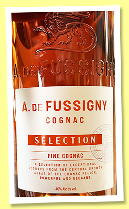
A. de Fussigny ‘Sélection’ (40%, OB, Fine Cognac, +/-2026)
A young blend from several crus, described as summery on the brand’s website. We should therefore be in territory close to that of the previous one. Colour: full gold. Nose: indeed, this remains on the light side, yet the whole leans more towards flowers and small herbs, before moving on to yellow melon and, above all, woodruff and honeysuckle. Little touches of freshly cut hay, right in the middle of summer indeed. Mouth: closer to the previous one, soft, very slightly sweet, with orange liqueur and heather honey. It is fresh and cheerful, the raisins behaving with commendable restraint. Finish: of medium length, still very slightly liqueur-like, rather marked by orange blossom and pink pepper. Williams pear liqueur and a light touch of anise thereafter. Comments: we are beginning to wonder whether, overall, we might not prefer the cheerful freshness of a good VS to the slightly more ‘caramel’ side of many VSOPs. But let us move on…
SGP:641 - 82 points. |
So, let’s move straight to their XO (we’ll skip the VSOPs for now) … |
|
|
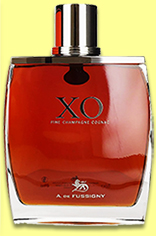
A. de Fussigny ‘XO’ (40%, OB, Fine Champagne, +/-2026) 
A blend of Petite and Grande Champagne aged between 10 and 25 years. The flat, square decanter is very, very handsome, we do rather think it may never find its way to the recycling bins, ha. Not joking here. Colour: copper amber. Nose: it is not easy following a charming VS, for by contrast the roasted hazelnuts, nougat, tobaccos and dried figs are almost, let us say, rather boisterous. Still, after a few minutes of adjustment, everything settles into place, fresh praline takes control, accompanied by jasmine and oolong tea. Very light wafts of dunnage. Mouth: something of a bridge between the floral and fruity freshness of a young cognac and the tobaccos of older versions. A slightly oriental side, with cedarwood, bidis, then liquorice and above all plenty of teas, for instance Earl Grey with bergamot. A most surprising saline edge, it must come from some wandering ‘triggering’ molecule. Finish: fairly long, more kind of matte, on oak, chocolate and tobacco, with a fine clarity, while the Williams pear from the VS returns to bid us farewell at the very end. Comments: we might almost add one point for the handsome decanter, but we do not indulge in that sort of thing at WF HQ, of course.
SGP:551 - 87 points. |
Let’s move on to the older vintages… |
|
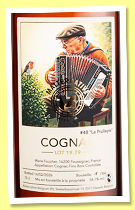
Marie Foucher ‘Lot 19.79 Le Prullepie’ (54.1%, Malternative Belgium, Fins Bois, 366 bottles) 
We have absolutely no idea what a prullepie might be, in any case, in French it is neither a bird nor an accordion. But let us move on… Colour: full gold. Nose: admirably taut, yet also admirably fruity, as if it were a blend of small plums just on the verge of reaching maturity. A few chalky touches in the background, in the style of a very good champagne (the sparkling wine, that is). Very light green pepper. With water: cut grass, fruit skins, almond milk, before pink grapefruit comes bursting through. Mouth (neat): one could call it frank, direct, honest and straight at this strength, in any case it is more marked by yellow citrus than many cognacs. Between ourselves, a cognac at 53% behaves on the palate like a malt whisky at 63%, honestly. So… With water: gentler, yet it remains taut, with a marked rustic side. Touches of bitter beer and flint. Finish: long and truly very beautiful, it is almost the best part, with citrus of superb freshness. Comments: very much malternative, and at times also rather close to an old marc (from the Jura, for instance). We do love this.
SGP:551 - 90 points. |
|
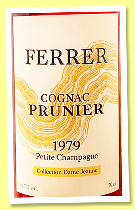
Prunier 1979 (53.7%, Ferrer, Collection Dame Jeanne, Petite Champagne, +/-2026)
We do find Ferrer’s labels eminently soothing, and never do we wonder which AI was used for a token costing €0.03. What class! Their rums that we have already tasted were really rather very good as well. Colour: amber gold. Nose: do forget it, this is top Prunier. Fruit in a pure, clean-lined style, chiselled, on peaches and old-varietal pears, then mango and guava. It is not complicated, yet in this context all the better, a thousand times better. With water: peanut, pistachio and sesame oils to complete and round the whole a little. It works perfectly. Mouth (neat): dash it, how good this is! A cocktail of exotic fruits, including citrus, with a few peppermint leaves. In short, a Charentais daiquiri. With water: let us give up, we are defeated, it is magnificent on every level. Finish: even the sublimely herbaceous and lemony signature is of interstellar level. Comments: in the end, this is a fairly simple cognac, almost ‘pop’, yet not a single molecule has gone astray.
SGP:661 - 92 points. |
Well, we love this Prunier and really ought to stop there. But this is Whiskyfun, after all… |
|
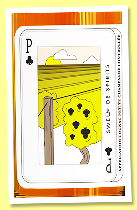
Jean-Luc Pasquet ‘L79’ (49.1%, Swell de Spirits, Wild Card #6, Petite Champagne, 2025)
Apparently, this baby was sold alongside a Monymusk, rather as if a London record shop had put together bundles of LPs with a Beatles and a Stones around 1969, would it not? Or a bundle of books, D.J. Trump + S. Kierkegaard. With our belated apologies to Søren Kierkegaard. Colour: full gold. Nose: somewhat the opposite of the Prunier from the same year, in that it is more oily, more herbaceous, almost waxy like a Springbank, rather than simply joyously fruity. As a result, it is far more intellectual, like one of the authors we have just mentioned (do guess which). Yet those wafts of syrup and almost Sicilian pistachio oil are sublime as well. Mouth: forget everything we have just told you, we are much closer to the Prunier on the palate, with explosive fruitiness, just a shade more on old apples, even farmhouse cider. Finish: very long and incredibly marked by pink peppers, especially Timut pepper. Comments: just a shade less ‘easy’ than the previous one, but we are truly splitting hairs. Another rather extraordinary Pasquet, though that was to be expected.
SGP:561 - 91 points. |
Hang on, we’ve just mentioned the Stones (have you seen they’ve got a new LP???) and the Beatles, as well as the year 1969, so we might as well strike while the iron is hot, quick as you like… |
|
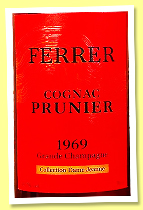
Prunier 1969 (49.7%, Ferrer, Collection Dame Jeanne, Grande Champagne, +/-2026)
No chit-chat, let us taste it straight away… Well, alright then, a very handsome red label, is this a bottling for our very dear Chinese friends? (whom we love, whom we adore…) Colour: amber copper. Nose: here we are more in the realm of polishes, old waxes, apple juice with honey, putty and oil paint, English cigarettes, you even find a Darjeeling side. It is very beautiful, though perhaps somewhat less, let us say, boisterous, extroverted and expansive than the 1979s. Mouth: a massive arrival of apples in all their forms. In juice, in jelly, flattened as they do in the Loire Valley (pommes tapées), dried, in cider, in liqueur, in eau-de-vie as in Rochelt’s… In short, you see what we mean. We then remain within this universe, with just the arrival of touches of orange and grape. After all, it is grape that we have in our glass. Finish: long, rather straight, a little herbaceous which is perfectly normal, and ending on fruity peppers. Comments: quite magnificent, though perhaps we ought to have stopped after the very extravagant 1979s. Our apologies.
SGP:561 - 89 points. |
More cognac coming very soon on WF, including considerably older vintages, pre-rock and roll, and even pre-jazz. |
| |
April 11, 2026 |
|
|
|
Angus's Corner
From our correspondent and
skilled taster Angus MacRaild in Scotland
Glen Keith & Macallan: times two
A couple of not particularly related pairs for this weekend: recent(ish) Glen Keiths, followed by two old Macallan. |
 |
|
|
 |
Glen Keith 25 yo 1998/2024 (49.7%, Club Qing 'Happy Loner', cask #149567, 1st fill bourbon barrel, 191 bottles) 
Colour: gold. Nose: abundant fruits! Plenty of ripe pineapple, mango, assorted fruit salad juice vibes, lychee, star fruit and kiwi. Behind that a few hints of beeswax and wee peppery hints. But it remains dominated by the fruits in a highly luscious and utterly splendid way! Mouth: same feeling of fruit salad goo! Syrupy and textural, with flower honeys, beeswax, more gentle peppery touches and then evolving impressions of sweet cereals, herbal teas and dried exotic fruit chunks. Finish: long, with persistent green and exotic fruits, also a little miso and pepper in the aftertaste. Comments: I feel like Glen Keith specialises in surprise fruit bombs that come at you, Ninja-style like this. Although, after a few such bottlings, should we really continue to be surprised? Anyway, a luscious and embarrassingly enjoyable wee Glen Keith.
SGP: 751 - 90 points. |
|
|
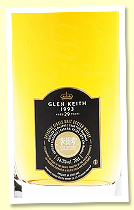 |
Glen Keith 29 yo 1993/2022 (54.3%, Signatory Vintage for The Whisky Exchange 50th Anniversary, cask #82789, refill hogshead, 236 bottles) 
Colour: deep gold. Nose: dominated by orchard fruits and runny honey, also some flower nectars and pollens, sweetened porridge, some slightly over-stewed fruit teas and things like mirabelle, eucalyptus and a light earthy note that make me think of white mushroom. Quite typical, characterful early 1990s, mature Glen Keith. Although, I would say this one noticeably lacks some of the more opulent exotic characteristics of QC bottling. With water: typically easy, honeyed, rich and showing this lovely, fruit-forward mature Speyside profile. More green fruits now, overripe banana, some mango and star fruit. Mouth: nice level of honeyed sweetness on arrival, that also incorporates those lovely flower nectars, honeycomb, golden syrup on toast, dried mint and pine wood. Tiny notes of tobacco leaf, some lemon-infused olive oil and bergamot. With water: once again, it gets even fruiter with reduction, lemon syrup, tinned pineapple, rhubarb and custard boiled sweets and apple pie with custard. Delicious, fun and easy whisky. Finish: good length, a little sharper and more peppery and waxier, but the fruits stand guard to the very end. Comments: Maybe suffers ever so slightly after the QC 1998, but it's the same feeling of fruit-induced surprise and pleasure. Do we talk enough about how good Glen Keith can be? Probably.
SGP: 651 - 89 points. |
|
|
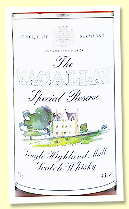 |
Macallan Special Reserve (43%, OB, mid 1980s)
This is an early NAS bottling released to mark the opening of Easter Elchies house by Princess Margaret (presumably Andrew was otherwise engaged at the time). It is reputed to be the same liquid as the Charles and Di Royal Marriage bottling, but left in cask a couple of years longer; let us hope it has withstood time better than the royal family's reputation... Now, Serge tried this one back in 2015 and wasn't 'too' impressed (WF86), but with old bottles from bottle to bottle over the decades you just never know... Colour: amber. Nose: dark honeys, wet leaves, pollens, beeswax, golden sultanas and some wonderfully leafy and 'cakey' old sherry. Proper old school tobacco leaf, mushroom powder and figs soaking in old armagnac. Gorgeous nose, dominated by old sherry and a sense of fat, old school distillate beneath. Mouth: pretty impressive heft and delivery for 43%! Rather a lot of wood spices, tarragon, dried herbs, fig jam, mincemeat, old Cointreau and spiced quince jelly. Feels pretty peppery and even a little mustardy. Finish: quite long, on figs, sultana, raisins and bitter dark chocolate with hints of walnut liqueur and vielle prune. Comments: impressive old sherried Macallan, and I can believe it may well have been the same juice as the Charles and Di bottling with a couple of extra years. Although, the punch and peppery power on the palate suggest something still rather vital and fresh - so, the opposite of the royal family in that sense. I feel more generously inclined towards this one than Serge did a decade previously...
SGP: 662 - 89 points. |
|
|
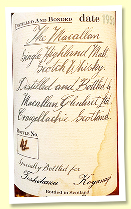 |
Macallan 1950 (43%, OB for Toshikazu Koyanagi, Japan, 1980s)
Serge also tried this one (WF87), but it was a short note recorded for the French market version (no idea if all these various market specific versions were the same juice or separate vattings) at that famously analytical nosing laboratory in Paris: Harry's Bar! And those notes were recorded back in... 2007! Ooft! Colour: deep gold. Nose: a glorious medley of old honeys, beeswax, lamp oils, paraffin, linseed oil, tiger balm, the subtlest of medicinal embrocations, metal polish, cedar wood and gorse flower. Indeed that gorse flower note goes more towards coconut with time, then dried out exotic fruit pieces and some dusty hessian rag. There’s also even some sublime notes that recall very old Sauternes with these stunning honeyed and nectar notes that stray towards botrytis. An amazing nose. Mouth: very waxy and peppery up front, drying as well, with old wood, camphor, putty, fir resins, natural tar and very delicate, peppery suggestion of peat. Also medicinal things like gauze, then more of these big linseed oil and beeswax impressions, and even a little funky cider apple tinge. Finish: medium, possibly just a suggestion of tiredness, but it’s still got this stupendous, old school waxy, honeyed, syrupy quality going on. With final tropical glimmers in the aftertaste. Comments: I wonder how many more years these old bottlings at 40% and 43% will continue to impress us with the same vividness and directness that they have in recent decades? This is still stunning old whisky, but it has an undeniable fragility about it that doesn’t feel like it would have been there at time of bottling. Anyway, this is still magnificent old style malt whisky with a depth and intensity of character that modern malts just don’t compare to.
SGP: 653 - 91 points. |
|
|
| |
April 10, 2026 |
|
|

|
|
The Time Warp Sessions,
Benrinnes, nearly forty years apart
|
Another distillery we really ought to do a proper, large-scale tasting of soon, but for now we’ll make do with this little comparison: 2010s vs 1970s. |
|
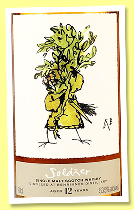
Benrinnes 12 yo (53.5%, Elixir Distillers, Macbeth Act Two, Soldier, refill sherry butt, 2400 bottles, 2025)
Perhaps the most beautiful label in the whole series, that is a good start. Colour: pale gold. Nose: ultra-classical, on barley, fresh scones, English breakfast tea, fresh potting soil, tourist fudge and freshly baked shortbread for travel retail. With water: the potting soil takes control, coffee grounds, the everlasting walnuts… Mouth (neat): more powerful on the palate, more marked by the sherry, walnut liqueur, brandy de Jerez, tobacco… we would almost say it is not the same whisky, it seems much ‘darker’ on the palate, despite its rather pale true colour. With water: pastries and malted breads to the hilt. Spelt bread, rye, barley… Finish: rather long, dry, rye bread and very malty beer. Comments: it is firm, demonstrative, for your friends who want to know what malt plus dry sherry means. We like this.
SGP:361 - 86 points. |
|
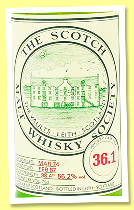
Benrinnes 1974/1987 (56.2%, Scotch Malt Whisky Society, #36.1)
Thus, the very first Benrinnes by the honourable Society. In those glorious days, they did not fuss about telling you it was semi-Spanish oak toasted to level 3 that had held palo cortado from Lustau for six years, three months, twenty-seven days and six hours, did they. Colour: light gold. Nose: even the nose is oily, on peanut oil and sunflower oil, then it develops on chalk and clay, towards a world we would more readily expect from a seaside malt. Indeed, we know all that is rather controversial. Lovely touches of petrol and green tea. With water: old tweed, new tweed, Woolite and oolong tea. Indeed. Mouth (neat): oh this is good! Zest, grapefruit, toasted pine nuts, very salty cured ham, vegetable oils… but where does all this salt come from? With water: what a beauty! We are almost embarrassed to be so surprised. Finish: long, perhaps more compact again, less expansive, yet still very beautiful. Comments: sometimes there are these little surprises that lift both the spirit and the morale. A small gift, from the heavens and from the old distillers, bless them. And from the SMWS.
SGP:451 - 90 points. |
| |
April 9, 2026 |
|
|
|
|
The Time Warp Sessions,
Ben Nevis, IB vs OB, 27 years apart
|
As a reminder, we suffer from a rare affliction known as bennevissitis, a condition that drives one to drink Ben Nevis whenever the opportunity presents itself. And, rather inconveniently, the opportunity presents itself rather often. This time, we’re going for a full-on Time Warp configuration: an old official bottling versus a very recent indie. But let’s not descend into complete savagery, we haven’t picked just any random vintages. We’ll be kicking things off with the youngster… |
|
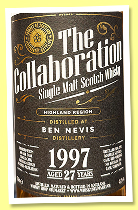
Ben Nevis 27 yo 1997/2024 (48.2%, The Collaboration, Whiskshop Neumarkt, Switzerland, 258 bottles)
Colour: pale gold. Nose: pure Ben Nevis, all on green walnuts, tobacco, leather, mustard, slag, frying oil, then papayas and guavas. That ‘dirty’ side is nonetheless extraordinary, we absolutely adore it. Of course, bennevissitis… Mouth: fat, almost soapy, but in a magnificent way, then it goes even further towards plasticine, zests, citrus peels, tobacco… And myriads of micro-elements. For example, smoked ham. Finish: long, with very handsome bitters, hops, Seville oranges… Comments: sometimes Ben Nevis really does come close to Springbank, unless it’s the other way round? That is the case here. Horribly good, with very restrained cask impact, despite that green walnut side. All that remains is to go prowling around Zurich to see whether there are any bottles left…
SGP:462 - 91 points. |
And thus we come to the venerable old OB, bottled before the previous one had even seen the inside of a still… |
|
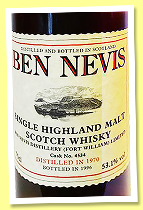
Ben Nevis 1970/1996 (53.1%, OB, cask #4534, 238 bottles)
After all, back then it wasn’t all that common for distillers to print cask numbers on the labels of their single casks. Colour: full gold. Nose: let’s say it, all those old official Ben Nevis bottlings had not exactly been superlative, but here, from the very first sniff, we understand that we’re dealing with a very fine bottle indeed, with masterful polishes and, of course, walnut liqueur. There are traces of slag as well, at any rate an earthy side, Bakelite, old orange liqueurs, and even a walnut cake glazed with gewurztraminer marc, just like Mrs Whiskyfun makes them so well. A few touches of dried wrack on the beach. With water: immense and very unexpected bursts of yellow melon! Mouth (neat): this is rather deviant, but that is precisely what we like. A bottle of Campari not properly closed for weeks, paraffin, blood orange that has seen better days, then a little olive and a drop of Scandinavian tar liqueur. With water: Thai broth, only cold. Basil, peppers, chillies, and even prawns. Yes. Finish: back to little tars and slightly bitter oranges, with clear notes of plastic and chen-pi in the aftertaste. Comments: this artist does lead you a bit of a dance, but we go along with it. I’ve always hated writing this: perhaps this is simply not exactly a malt for beginners. In any case, perhaps the finest official BN from the 1960s-early 1970s. I do mean perhaps.
SGP:462 - 92 points. |
I fear our bennevissitis will only continue to worsen, but according to the latest medical updates, it is not, apparently, a fatal condition. A relief. |
| |
April 8, 2026 |
|
|
Two wee independent Pulteney |
For it is always a pleasure to head up the coast beyond Brora, towards Wick, in the company of quality independent bottlers… |
|
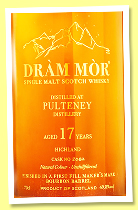
Pulteney 18 yo 2008/2026 (49.5%, Dràm Mor, cask #Z084)
We had tasted an excellent sister cask of 17 years earlier in January, here is a new one. We do not yet have the label for this new release, so we are temporarily using that of the previous cask. Colour: gold. Nose: a fresh bourbon profile, a touch rooty, with apple and slightly underripe mango, then increasingly orange. The light coastal salinity of Pulteney is present too, then fairly fresh oak begins to develop. With water: it rounds out, rather on orange cheesecake, with some freshly grated zest if you please. Mouth (neat): very much on the malt, orange and grey pepper, with a certain lemony and herbal tension. Hints of ginger and nutmeg. With water: the pepper and ginger take control. Finish: long, both rich and lively, on lemon and pepper this time. Woody echoes in the aftertaste. Comments: the cask has played a rather marked role, but we have avoided vanillin. All very very good.
SGP:551 - 86 points. |
|
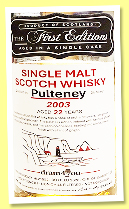
Pulteney 22 yo 2003/2026 (52.2%, The First Editions for dram4you, bourbon, cask #HL21992, 150 bottles)
A release for our dear neighbours in Switzerland. Colour: chardonnay. Swiss, of course. Nose: rather less wood, and rather even more citrus, with little touches of eucalyptus. A Pulteney that is somewhat more medicinal than usual, we would say. With water: apples, pears, quinces, all of it with lovely freshness, then clementines. Mouth (neat): very lovely freshness, we could almost believe we were by the seaside ourselves. Lemon, seaweed, light peppermint. With water: other little citrus fruits join our lemony friends, along with a fine amount of lemongrass. Finish: long, zippy, rather like a very good sauvignon blanc. Swiss as well. Comments: we do prefer this one a little, but that is entirely because we tend to prefer casks that leave a lighter imprint. Another taster might very well take the completely opposite view, but in any case both Pulteneys are excellent.
SGP:551 - 88 points. |
| |
April 7, 2026 |
|
|
|
|
The Time Warp Sessions,
bizarre Tullibardine 40 years apart
|
Indeed, this time, we’re going all in and tasting two malts distilled forty years apart, sound good? It might feel a bit like pitting Bad Bunny against The Yardbirds, or Taylor Swift against Helen Merrill, but why not? What’s more, they were both bottled at very similar strengths… |
|
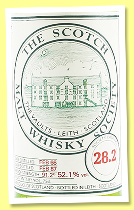
Tullibardine 1966/1987 (52.1%, Scotch Malt Whisky Society, #28.2) 
Indeed, this is only the second Tullibardine ever offered by the very honourable SMWS. This vintage still dates from the Brodie Hepburn era, before the takeover by Invergordon. Thanks to scotchwhisky.com, always a seminal website, we continue to pray that it may remain online forever, even if it has no doubt already been entirely pillaged by the asthmatic coyotes of ChatGPT and company. Long live scotchwhisky.com! Colour: pale gold. Nose: really on frying oil at first, after many rounds of frying to boot, but it rather quickly moves towards strawberry yoghurt, cottage cheese, pine needles and new rubber. Wellingtons. All the oddness of old Tullibardines is here. With water: it goes towards carbon paper and Tipp-Ex. Do you remember Tipp-Ex? (A silly joke from forty years ago had it that peroxide-blonde secretaries used to put some on their computer screens. Silly times.) Mouth (neat): truly a malt apart. Tart apples, farmhouse cider, rice vinegar, porridge and a few unknown bitter herbs, sucked or chewed absent-mindedly during a walk in the forest. Which we should never do, should we. With water: as so often, citrus comes to the rescue, but the whole remains really rather bizarre. At least we can say that this is a singular malt. Finish: same again. Quite a strong fermentary acidity. Comments: for those who insist on having tasted every style. We do, for instance. Not easy all the same…
SGP:372 - 72 points. |
That should make things easier for the next one… |

|
Tullibardine 19 yo 2006/2025 (52.5%, Thompson Bros., 194 bottles)
With a nine-year second maturation in a PX hogshead. Colour: copper gold. Nose: let’s admit it, this is rather bizarre too, but perhaps we’ve never been quite so fond of a PX finishing or second maturation. Sultanas and pecans, chestnut honey, pipe tobacco, slight hints of old comté or gouda… With water: it opens up, it lightens, it heads towards old Madeiras or dry sherries. More amontillado in style than PX, unless it was PX seco. Mouth (neat): trans-spirit, somewhere between malt, rum, armagnac and herbal liqueurs, Mitteleuropa-style. Old walnuts set the tempo, raisins play first and second fiddle, while a combo invloving brown tobacco and balsamic vinegar handle the bass. Continuo bass, naturally. With water: it’s incredible how much good the water does it. Superb old walnut wines, sercials from Madeira, zibibbos from Marsala, etc… Finish: same again, with touches of dry ham and ginger tonic. Comments: frankly, we’re somewhere between malt and old oxidative wines. Which suits us perfectly, as we adore both. Very well played, Thompson Bros.
SGP:272 - 88 points. |
| |
April 6, 2026 |
|
|
|
The Time Warp Sessions,
today Ledaig, 32 years apart
|
Just a heads-up, we still have zillions of Ledaigs to publish, but today we’ve chosen to take a closer look at the stylistic differences between the earliest vintages (alongside Longrow, so roughly 1972–1975) and a much more recent version. I’d remind you that, in the early 1970s, a number of distilleries began, or resumed, producing peated whisky, as blenders were in great need of it. Tobermory was one of them with its Ledaig, as was Clynelish at the other end of Scotland with Brora. |
|
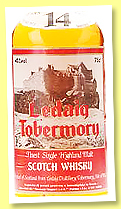
Ledaig Tobermory 14 yo 1973/1987 (40%, Sestante)
We had loved the 56.3% version, some… er, twenty years ago (WF 92). We used to call it ‘the Wehrmacht Ledaig’ because of the label, but we were afraid of nothing in those days. As it happens, we had never tasted this more civilised version, so it is time to set things straight. Colour: gold. Nose: extraordinary. Please forgive me if I use military analogies, but here we are deep into boot polish and gun oil, flint too, then, very gradually, we shift towards oysters and an old fisherman’s net stranded on the beach while someone is grilling fish a little further away. And there is tar that comes along with it. What a nose! Mouth: it hesitates a little right at the start, gathers its strength (only 40%, do not forget), then charges towards smoked fish and equally smoked meats. This ultra-kippery side is nonetheless rather rare, even on Islay. It then develops a little further, on engine oils and a few delicately petroly and waxy notes. It is not powerful, but it is never weak. Finish: certainly not immense, but there is a veritable avalanche of ashes and polishes. Comments: superbly singular. With a thought for Roland P.
SGP:356 - 91 points. |
Let’s go to the other end of the spectrum… |
|
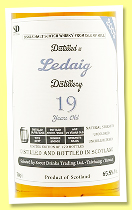
Ledaig 19 yo 2005/2025 (65.5%, Scout Drinks, butt, cask #900002, 170 bottles)
Colour: gold. Nose: the lineage is not quite so obvious, but do watch the strength, we are not dealing with the same ABV at all. It seems extremely fine, but to appreciate it at this strength, one has to employ the Big Jim McEwan method. Outdoors, facing the wind, letting the latter carry the aromas up towards your nose, without ever ‘sniffing’ yourself. Under those conditions, it is fresh and very coastal, you are by the seaside, dressed in an old oilskin and absolutely brand-new rubber boots. With water: an avalanche of new plastics, practically an entire bulk delivery from Tupperware. Do you remember? While we are at it, there are also a few pots and bottles from Avon. Do you remember as well? Mouth (neat): tremendously sharp. Salted lemon juice, like some competition-grade margarita. But here, even the McEwan method will not do, you really must add water rather quickly… With water: it remains a little brutal, rather in the style of a very young ueber-Ardbeg, but if pepper, tar, plastic and salt do not bother you, you are going to have a ball. Finish: as if that were not enough, now chilli comes storming in. Comments: fruit? You may look for it for quite a while, but we adore it.
SGP:267 - 90 points. |
| |
April 5, 2026 |
|
|
Cognacs for Easter
In short: cognacs. For this Easter Sunday, we decided to return to a few cognacs, some of which we hope may prove rather spirited. And so we begin with this traditional little apéritif from days gone by…
|
|
 |
|
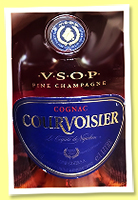
Courvoisier ‘V.S.O.P.’ (40%, OB, Fine Champagne, USA Transportation, +/-1990) 
Oddly, the label rather prominently bears the word ‘transportation’, which would seem more commonly found on much older ‘American’ bottles, yet I’m quite certain this one dates from the 1990s. Another little mystery in the world of spirits, though I know absolutely nothing about American customs regulations, as you may have gathered. In any case, this is a Courvoisier from the Allied-Domecq era rather than Beam. Right then, let’s taste it… Colour: full gold. Nose: raisins, raisins and more raisins. Plus a tiny touch of liquorice, fairly typical. It’s not at all unpleasant, but it is very basic. Mouth: we find the raisins again, joined by a few notes from much the same register (honey, apricot jam). The structure is perfectly sound. Finish: fairly long, though still essentially focused on raisins. Comments: in any case, it does not seem to have lost any of its consistency over the years, this pleasant cognac was probably much the same thirty or thirty-five years ago.
SGP:631 - 78 points. |
Since we’re in VSOP territory… |
|
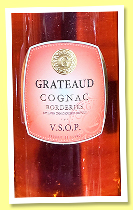
Grateaud ‘V.S.O.P.’ (40%, OB, Borderies, +/-2026)
We’re in a single cru this time, the Borderies, with a small estate in Chérac, little flannel, but very good quality. Colour: full gold. Nose: all the difference between a very large-brand, very high-volume blend, even if the bottle was over thirty years old, and a proper grower’s cognac, with more rusticity but also rather more complexity, notes of small apples, green plums, damp earth, melon skin, and a few metallic touches, around old copper. In short, a nose… of still. The raisiny side is dramatically reduced here, and we’re certainly not complaining. Mouth: exactly the same feelings and impressions, word for word, even if on the palate it is a little more honeyed, with also a few drops of maple syrup. The earthy side returns afterwards. Finish: fairly long and much more liquorice-led, even caramelised, which is a little surprising, but really not unpleasant. Comments: very, very nice.
SGP:551 - 82 points. |
|
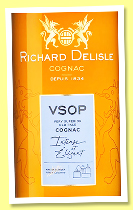
Richard Delisle ‘VSOP’ (40%, OB, Intense & Elégant, +/-2025)
A blend with no cru mentioned, by the house of Cabanne. The XO we tasted in February had been very good, though a little marked by the wood (WF 80). This one should be fresher… Colour: gold. Nose: for once I rather agree with what is written on the label, it does indeed feel ‘intense and elegant’. Lovely notes of fresh grapes, pips, with touches of stalk that do not bother me at all, quite the contrary, then some mentholated and camphory hints, all in… elegance. Mouth: we have the impression of biting into a grape! Light muscat-like touches (there is no muscat, of course) and mead, then ripe peach and even riper melon. Finish: of medium length, perhaps a little extra-softened (sweet wine), but it remains fresh and cheerful. A touch of orange in the aftertaste. Comments: very pleasant and very ‘süffig’, as they say in Alsace.
SGP:551 - 83 points. |
We should bear in mind that these VSOPs are still young. It’s much the same in whisky or rum, when you see “old” or “vieux” on a label, it generally indicates that the liquid is in fact quite young. On we go… |
|
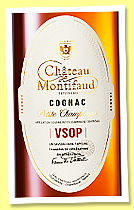
Château de Montifaud ‘VSOP’ (40%, OB, Petite Champagne, +/-2025)
Here we are in Jarnac. We had already rather loved the very recent 2006/2026 from Montifaud (WF 87), here we should nevertheless be in slightly more plebeian territory. Colour: full gold. Nose: very much in the Cabanne/Delisle style, fresh grapes, bunches, fine lees, apples, greengages, fresh mint… It is really fresh and, shall we say, authentic. Mouth: same comments. A little more honeyed, with a very slight touch of toffee and yellow fruit jams. As an old uncle keen on mountaineering used to say, it goes down all too easily. Finish: medium length, on honey and a few drops of grappa. Truly, grappa. A slight softness in the aftertaste. Comments: these VSOPs from good houses would not disappoint tasters who are not necessarily seeking ultimate crus.
SGP:651 - 83 points. |
Right, let’s move on vertically, but first, we welcome a guest… |
|
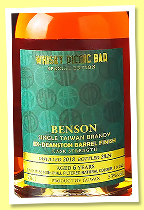
Benson 6 yo 2018/2024 (53%, Whisky Picnic Bar, Taiwan brandy, ex-Deanston barrel finish, cask #185, 243 bottles)
Admit it, this is rather amusing! It seems to me that TTL, the makers of the excellent Taiwanese whiskies Nantou/Omar, also produce brandies, though I am not sure whether they are behind this little creature. Deanston, that much we do know, do we not. Colour: full gold. Nose: good heavens, this is rather lovely! The whisky cask is immediately apparent, with a kind of American oak quite unknown in cognac, buttered brioche, ginger biscuits, even a touch of brown ale, while the brandy itself, perhaps a little intimidated, remains very discreet for now. With water: very little change. Mouth (neat): it is much the same impression, one might almost think of a whisky finished in brandy rather than the other way round, though I must admit the whole works rather well. Touches of fermented fruits and ginger. With water: much the same, although we are more clearly at the crossroads of the two worlds, with citrus fruits acting as border control. Finish: likewise, leaning towards the fermentary and herbal, then the wood. Comments: for once it is the whisky that influences the other spirit, rather than the reverse! Very pleased to have tasted this rather improbable (at least on paper) little beast.
SGP:461 - 80 points. |
|
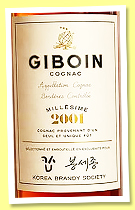
Giboin 2001/2026 (58.4%, OB for Korea Brandy Society, Borderies)
A single cask. Giboin is a house we are very fond of, one sometimes comes across rather exceptional single casks from them in good restaurants in Paris, among others. For example, at La Cagouille! But here, we are in Korea… Colour: full gold. Nose: rather explosive on the nose, imagine a mixture of very old triple sec, yellow Chartreuse, peach liqueur and soft honey, acacia-style. It should also be said that old cognacs at this sort of strength are rather rare. With water: superb varnish and wood glue, cedar, green tea, blond tobacco… Mouth (neat): we are entirely in the territory of a fairly old fruit-driven malt, Rosebank, Balblair, Ben Nevis from the mid-1990s… And I am not joking, what sort of sorcery is this? But let us not get carried away, the DNA is very much Borderies. With water: much the same, water does not shift it an inch, apart perhaps from a slightly more marked herbal side. Finish: long and rather sharp. Lemon, green apple, Rosebank. Yes, really. Then liquorice, overripe apple and tobacco in the aftertaste. Comments: one could hardly make it more malt-like. Naturally, I adore it.
SGP:561 - 90 points. |
|
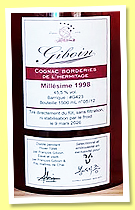
Giboin 1998/2026 (45.5%, OB for Korea Brandy Society, Borderies, barrique, cask #G423)
It is a magnum (yay!) of Borderies ‘de l’Hermitage’, this one too for our friends in Korea. Magnums are still terribly classy, I am always surprised that the big malt brands produce so few of them. Colour: gold. Nose: more austere, more herbal, more on hay, dried flowers, green teas… That said, if you give it time, it opens slowly like a flower in the morning, successively revealing apricot, rose, honeysuckle and myriads of other little floral and herbal aromas. There is something almost poetic about it, less demonstrative than the magnificent 2001. Mouth: we find again the liquorice power and the very tobacco-led profile, along with citrus fruits, earth, eucalyptus and mint from the 2001. We are not complaining. Finish: long, with oak and pepper nevertheless a little more dominant than in the 2001. Comments: mea culpa, mea maxima culpa, I ought to have tasted this 1998 before the 2001, which does cast ever so slightly too much shadow over it. But we are doing a vertical, are we not…
SGP:461 - 89 points. |
|
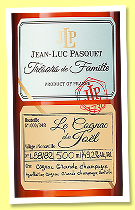
Jean-Luc Pasquet ‘Le Cognac de Joël - Lot N°88/82’ (49.2%, OB, Grande Champagne, 348 bottles)
It seems fairly obvious that this cannot be a Grande Champagne from 1988 bottled in 1982, we have kept a little common sense, so we imagine it is a blend of the two vintages. Or something else… The village of origin of this baby is Malaville, in Charente, which Wikipedia tells us has not existed since 2017. So we are stepping into another dimension, so to speak… Colour: full gold. Nose: the most floral of this little session, on peonies, proper geraniums, rose petals and orange blossom water. Then come mandarins and bergamots, as the whole becomes increasingly oriental. Between ourselves, it is splendid in its finesse and purity, but why on earth did they dissolve the village? Mouth: but good heavens, this is delicious, elegant, oriental and floral! We are no longer allowed to call this a ‘feminine’ style, but you see what we mean, while little by little pink peppercorns take control, pushing the whole towards the style of the third infusion of a very old Pu-erh tea. Of course we are joking a little, but you get the idea. In any case, it is magnificent. Finish: fairly long, still of great finesse, now with touches of cedarwood and even incense. Rosewater signs off the whole, in a slightly, let us say it since we fear nothing, decidedly ‘feminine’ manner. Oh, and the trio of pink pepper, nectarine and blood orange that follows… Comments: what a Grande Champagne! Could Malaville be rehabilitated? It seemed to cognac what Cremona was to violins… and bravo to the house of Pasquet.
SGP:651 - 91 points. |
One last little one, we’ll come to the older vintages, much older ones, next time… |
|
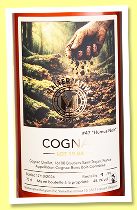
Chollet ‘Humus Noir - Lot 19.84’ (45.1%, Malternative Belgium, Bons Bois, 99 bottles, 2024)
Black humus could well suggest truffle, of the tuber melanosporum sort. It hardly needs adding, I think, that this would be excellent news. Colour: golden amber. Nose: it is rather striking to note that this humble Bons Bois comes quite close, in spirit and style, to the Grande Champagne we have just tasted. Flowers, fruits, aromatic tension, freshness, herbs, dill, peach and apricot skins, tropical greenhouse… But not the slightest trace of black truffle. We are therefore preparing to send a registered letter of complaint to the most distinguished staff at Malternative Belgium, but first, let us have a quick look at the palate… Mouth: no visible black truffle, but dark honey, liquorice, pipe tobacco, in short other marvellous things of a black hue. Synaesthesia knows no bounds. Finish: superb varnishes, resins and tobaccos, yet always with a form of freshness. Comments: well, we hereby declare that we are immediately cancelling the legal proceedings we were about to initiate ‘on the grounds of absence of black truffle’ in this cognac, not least because we are in the midst of Easter peace. And because it is, after all, a magnificent Bons Bois.
SGP:561 - 90 points. |
Au revoir, Joyeuses Pâques, stay tuned. |
| |
April 4, 2026 |
|
|

So what’s Mike ‘Lagavulin’ Nicolson up to these days?
|
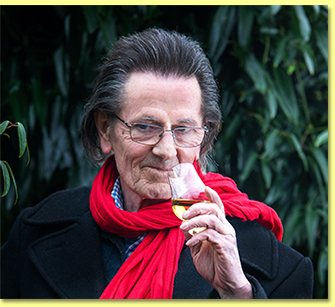 |
On 25 May 2024, we put back up on these pages an interview with Mike Nicolson, originally done in 2004, just after the retirement of the legendary former Lagavulin manager and host of the Malt Advocate Course at Royal Lochnagar. We’ve kept in touch since, and as the man’s never short of a word, we thought we’d throw a few extra questions his way. Not necessarily linked, mind, so please take what follows more as a loose collection of questions than a proper, neatly structured interview. |
Mike, for our younger readers, or those whose memory’s been wiped out by a few too many no-age-statement malts finished in Mizunara+Zinfandel, could you remind us, in a few words, who you actually are? |
Well, a man from another time, I guess. Someone lucky enough to have spent nearly sixty years in and around malt whisky. Someone whose earliest childhood memory is being left by his holiday bound parents at the home of the manager of Glenlossie Distillery, my Grandfather. Must have been 1950 maybe 51? To the surprise of some, myself included, they came back, and carried me home to Glen Elgin, not a million miles away, where Paw was manager. Having presumably prospered in malt distillery management he crossed the great divide into grain whisky as the manager of Cameron Bridge in Fife and later Port Dundas in Glasgow, where I was brought up, which probably explains both my “conservative” attitude to financial matters and my bad attitude. Fast forward nearly twenty years and employment was secured with the entity that morphed into the Diageo of today. Their training allowed me to spend time at a large number of their units and ultimately led me to manage five of them, Glenkinchie, Blair Athol, Caol Ila, the mighty Lagavulin and Royal Lochnagar. Thirty-six years in total but it seemed like ten. A fortunate man methinks, to have the good luck to have a rich, varied and fulfilling career making my homeland’s signature liquids. |
With a career like that, 14 distilleries over 36 years, you must have a whole bagful of stories, each more colourful than the last, as well as a few deeper reflections you’ve picked up along the way… |
Oh, Serge, couldn’t I have a question that I can respond to with a pithy one-liner? Of course, there is an endless list of memorable incidents like ‘the yellow whisky”, the great flood” or
alternatively, “the water’s run out”, or “the still that wouldn’t boil” but the most memorable thing by far is the people who helped me make it. In addition to their production duties folks that were in other lives, thieves, amateur psychologists, folk singers, owners of Divinity degrees (not too many of them), psychiatric cases, teachers, fishermen, policepersons, crofters, students of human nature, former explosive experts, people who wished they were doing something else like gamekeeping or running a scrap metal yard. The Frenchman with no toes, the one-eyed sparkie, someone called “W” and singled out for special mention, is the head Maltman who saved my life one morning. My list is small and inadequate, but how many people do you meet in nearly forty years? What I find remarkable is the tolerance that allowed, usually in groups of no more than thirty, us all to get on and get the job done. |
Speaking of jobs, how does one become a Master Distiller, the job that might just be the most prestigious after being Dua Lipa’s personal assistant? And, in fact, how did you end up in that role yourself? |
Absolutely no idea. There was no test, no interviews, no investitures in hallowed halls, no TV appearances, nothing. It was simply that after a significant period of time, people in my organisation started calling me it. Maybe everybody else died, or perhaps it had something to do with not getting caught. Hard to tell. |
Right then, so for the past twenty years or so, you’ve been retired from Diageo, the biggest spirits company in the world. But I know you haven’t completely stepped away from the whisky trade… |
Ah, yes, retirement was the idea, but to be honest, I have been “dabbling”. I’ve been lucky enough to commission four distilleries since then. Two on Vancouver Island, Shelter Point and the award-winning Macaloney’s Island Distillery, Himalayan Distillery in Nepal and the curiously named Ceilidh Distillery in Longyan, which is in Fujian Province, China, and whose spirit I have high hopes for. |
I had expected some domestic resistance to this behaviour, but it turns out that the Duchess is of the opinion that ‘it gets me out of the house’ which is a good thing, apparently. |
We know plenty of enthusiasts and commentators would love to get taken on by distillers, or even work in a distillery. Back when you were in charge, how did you go about recruiting your staff, to hire the right people? |
To hire the right people? Generally, I have found it best to let other people do it. |
It was my habit to take a walk down to the canteen around lunch time, have a cup of tea and casually mention (like they didn’t already know) that we needed a mash man. Then, I’d Walk back to my office and wait for the phone to ring. Shortly thereafter, a small number of likely candidates would get in touch, and we would proceed to a conclusion. |
In often small, rural communities who would know best of suitable candidates? Well, the people that live there surely, my boys in particular. Candidates would therefore come to me pre vetted in terms of skills, personality, motivation and in particular, how the “newbie” would fit into the existing crew, a worrisome aspect of recruitment for the boss. |
Comforting too to know that we could achieve successful results without disturbing the Human Resources department from their jig saws and Pokémon. |
The really mythical thing at Diageo, beyond the blue-chip distilleries, was the ‘Malt Advocate Course’ at Lochnagar. What was it, exactly? Was it really the place where you could drink Malt Mill to your heart’s content? |
The Malt Advocate Course was an enlightened and groundbreaking initiative of Diageo’s Malt Whisky Marketing Team. An immersive, four-day course on Malts. The difference between this course and others was that they would tell the truth. The course content was designed by in house experts from the fields of production, maturation, quality control and sensory evaluation, focusing on how to make it, the reasons that malt whiskies taste the way they do, the differences, and how to maintain them. Held at Royal Lochnagar, occasional distillery visits and access to some superior casked whisky supported the “booklarnin’ “. The attendees were Diageo folks from all over the World, whisky writers, retailers, and those with influence in our World of Malt Whisky. |
As host and contributor, this meant the opportunity to work with, amongst others, notable whisky persons including Charlie MacLean, Dr Nick Morgan, Dave Broom and Dr Jim Beveridge, the only downside being in the sleep deprivation department. The course’s success went beyond happy customers. With the passage of time, it was noticeable that the language in the “public square” progressively began to contain words and ideas not completely different from course content. We thus moved on from the “it’s that way because they never clean the cobwebs” school of thought. |
About fifteen years ago, after loudly proclaiming that age statements were essential, right up to Chivas Bros’ famous ‘Look for the Number’ campaign in 2010, everyone suddenly started hiding the ages of certain whiskies, admittedly younger ones, though not always. Have age statements officially become overrated? |
Not very comfortable with the “overrated “word Serge. If you think back to a time when Scotch Whisky was only known to the World as blended, then the age of the youngest component must have been big for the customer and the producers. For the consumers it would allay anxieties about quality and consistency in a world that gave them no way of measuring the liquid, up to that point, other than it came in a tartan box. The producers could enjoy these benefits in a commercial sense to promote customer loyalty and as a weapon to combat competing spirits whisky or otherwise. It’s one of the reasons we got so big. If we could go back to 1940 I’d be surprised if you could find me someone who thought age statements were a bad idea. It’s probably the reason that we’re not all drinking Tequila at New Year. |
However, things are different now. Customer knowledge has increased exponentially, and questions are asked, properly, about the value of age statements in this day and age. |
If I could reduce it to personal terms, you might ask me do you drink NAS? My answer would be, certainly. Why? Because I know, and I never hear this discussed, how much better blenders have become. Over the last thirty years there have been enormous scientific developments in research deepening our understanding of what exactly is going on in there, the cask that is. Couple that with the blenders expertise and experience means that it comes as no surprise to me that a composed liquid can be offered at younger age than once was the case |
So, I feel less tense about no age statements than I used to, and I would encourage others to feel the same. Don’t get me wrong though, I still use numbers, they still have value for me. If I am considering spending two hundred (expletive deleted) dollars on a bottle of Lagavulin I need to know that it’s the sixteen and not the eight! |
Times are clearly a bit tougher these days, yet barrel investment schemes still seem to be going strong. What do you make of them? What are your feelings about them? |
Well as part of the problem really, directly or indirectly making contribution to price elevation. Pushing the price of Malt Whisky into the stratosphere, I have been reminded, has been good for my pension and I don’t wish to sound ungrateful but at the current levels it must give younger, perhaps new, consumers reason to pause and reconsider where the value is for them. If we believe what we read then, fairly imminently, the horizon is going to become dark with the advancing swarming hordes of young potential consumers on their electric bicycles clutching their digital wallets in their hot little hands and we should get ready. |
My first reaction to this scenario is to remind myself that most of the swarming hordes live in other people’s basements so, I hope the business, in marketing terms, is looking after the basement owners because it’s going to be that way for a while. These young persons, we are told are different from we malt afficionados in that they crave variety, you know, raspberry today, tomorrow perhaps pineapple. They may well have been conditioned by the unrivalled success that the craft beer business has become, as evident by the large increase in vacant commercial property in my neighbourhood. |
It's plain that significant change is required although I remain to be convinced that putting dragons on the box is the way to go. Nor am I greatly surprised that in spite of there now being orange on the label of my beloved Talisker10, it tastes exactly the same! |
Blended whisky is another matter. For generations we have enjoyed the fruits of the modern-day wizards that we know as blenders who have provided us with a huge range of quality liquids at reasonable price. Change, innovation and professionalism are not strangers to them. It seems to me that there lies opportunity. Designing liquids, in the blended form, agreeable to the advancing hordes doesn’t seem too unreasonable to me without trashing the history, craftsmanship and success of our forefathers. |
Quite a few distilleries, especially the newer ones, have built visitor centres, even if some are shutting them just now, at least temporarily, like Clynelish. But really, what makes a great visitor centre? |
The people in it. Tour guiding is to my mind a greatly undervalued discipline. There can’t be many industries where the producer can walk out into the yard and meet the customers, every day. What an opportunity! It doesn’t really matter if your visitor centre is immaculately dressed with the right branding messages in all the right places, people will remember, above all else, who showed them round. Being able to recite the tour guide training manual has got little to do with a memorable tour experience. It’s the manner of delivery, involvement, personality and approachability of the guide that makes it. The Human Resources Department has yet to come up with a manual for that. Even if they did understand what I was talking about. Oh, I’m sorry, did I mention them before? |
I hired a junkie once. This young man, in spite of his affliction, had a gift with communication in this arena and gave me two years of great work until, inevitably, things had to come to an end. My belated thanks to the many fine folks that helped me with this important but poorly managed function. |
Everyone’s talking about AI, high tech, and enhanced production methods, but we also know that distilleries are full of little inherited quirks that can make all the difference. Do you remember that story about the method used to keep an eye on coal, for instance? |
Ah well, that story pre-dates me a bit, but it endures, going back to the days when malt distilleries' energy source was coal, and they operated a five-day week. Back then, times were a lot tougher, wages were poor, and pilfering was endemic. The story concerns the lengths employees would go to avoid being selected to “paint the coal”. |
Picture this: it’s Friday afternoon, and everyone is cleaning up in anticipation of the weekend. Since the distillery was in a quiet and often remote place surrounded by the workforce’s cottages it’s perhaps understandable that the manager might feel some anxiety about the security of his coal stacked in such a large pile in the yard, unsupervised, for the whole weekend. The answer? Select somebody, give him a bucket of lime and water mixture and instruct him to paint the coal, all of it. |
Changing the colour of the coal mountain from the familiar black to white is interesting. What does it mean? It means that when the Manager shows up on Monday, and the coal heap is not completely white, then he can be pretty sure that some of his coal is not where it’s supposed to be, and an investigation can begin. |
It’s curious to note that these days, when Corporations earn millions of dollars dispensing security advice, once upon a time, an effective security system was as simple as a coat of whitewash! |
Just one last question, Mike: I imagine you’ve got some new, galaxy-scale plans and projects up your sleeve. Can you tell us a little about them, or is it all top secret? I promise neither the FSB, the CIA, nor Mossad are reading Whiskyfun, but careful, I can’t guarantee that the SWA or various other well-meaning AIs aren’t skimming it.… |
Well, it might seem to be an ultimately hopeless endeavour to most people but, the majority of my energies these days, seem to be focussed on out living Keef. |
| |
April 3, 2026 |
|
|
Tremendous bourbons like you’ve never seen, the BEST BOURBONS IN THE ENTIRE WORLD!!!
Right. Well, indeed it was probably about time we once again sampled a little wheelbarrowful of American whiskies, picked at random from the stock. Starting with what may well be a bit of a joke. Slipknot? That heavy metal band that wears masks? |
|
 |
|
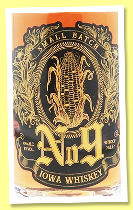
Slipknot No.9 Iowa Whiskey (45%, OB, USA, +/-2021)
It would seem that this baby comes from the Cedar Ridge Distillery, but do not take our word for it, and that the heavy metal band Slipknot, which admittedly is not part of our usual playlists, also hails from Iowa. Were there no distilleries near where Trane, Miles or Zappa lived? Colour: gold. Nose: this is honest, rather nicely textured on the nose, with oriental pastries, orange blossom, vanilla cake, along with delicate (really?) touches of country bread, violet and liquorice. Seriously, this is a charming nose. Mouth: well now, this is good, spicy, floral, with a pleasing tension and a development on poppy seeds and pumpernickel spread with honey and fresh butter. Lovely rye notes, there must have been quite a fair amount of it. Finish: fairly long, with lemon coming through. Just a slight touch of sawdust. Comments: just goes to show, we may play the clever chap, but we should never judge by the labels. I think I shall listen to Slipknot tonight, it will be the first time in my life!
SGP:551 - 83 points. |
Important update: you should rather call that nu metal rather than heavy metal. Thanks Thomas. |
|
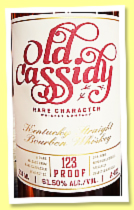
Old Cassidy (61.5%, OB, Rare Character Whiskey Co., Kentucky Straight Bourbon)
This would appear to be an independent bottler, so the distillery here is not known, but we could be mistaken. It could even be a blend of Kentucky bourbons. Colour: copper gold. Nose: but this is perfect, in any case utterly idiosyncratic, on vanilla pods, gentle varnishes, roasted peanuts, fudge and nougat, and still quite a fair amount of alcohol. With water: earth and rye come to the fore. Mouth (neat): powerfully woody yet with elegance, on peanut butter, coconut but without excess, and floral touches leaning towards geranium and lavender. With water: it can take on vast quantities of water, which is always a sign of quality. Aniseed or caraway bread, vanilla, touches of barbecued corn… Finish: same profile, but careful, too much water dries it out a little this time. Comments: a fine beast for bourbon enthusiasts, perhaps a little less so for those who favour malt. Rather very dry for a bourbon.
SGP:451 - 85 points. |

|
Heaven Hill 15 yo 2009/2025 (61.5%, The Whisky Blues, The Milwaukee’s Club, Kentucky Straight Bourbon, barrel, cask #3448521A, 243 bottles)
Colour: gold. Nose: this is much tauter, closer to a malt, more lemony, fresher, without that woodiness and that caramel which can sometimes become rather invasive in bourbons. With water: little orange blossom cakes, orange zests, Campari and ski wax. Indeed, really. Mouth (neat): very good, taut, malty, on citrus fruits and soft spices, plus a violet and lavender combo that works perfectly. With water: very little change, except for the arrival of bitter oranges. Everything remains perfect. Finish: long, fresh, citrusy. Italian orange bitters are calling the shots. Comments: now this really is bourbon for malt lovers, well played Whisky Blues. You will tell me that when you call yourselves Whisky Blues, you are bound to be thoroughly legitimate in such circumstances, are you not?
SGP:561 - 88 points. |
|
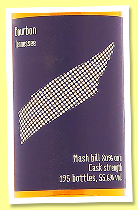
Tennessee Bourbon 2021/2025 (55.6%, Spirit of the Day, #8, 195 bottles)
A distillation in South Carolina from 80% maize. We are not entirely sure we follow everything regarding the connection between Tennessee and South Carolina, but never mind, let us proceed… Colour: full gold. Nose: oh this is unusual, on baked aubergines and Jerusalem artichoke gratin, some curious notes of rum, blood oranges and flowers (pansies, borage). Very faint touches of shampoo. With water: rose-flavoured popcorn, does that even exist? Mouth (neat): even more ‘rum-like’, softer, we really find the maize and soluble chicory. With water: firmer notes return, and most welcome they are. Coffee fudge, for instance. Finish: much the same, plus touches of fig wine. It is not often good, but here it works. Comments: territories we seldom explore, but here it is with great pleasure.
SGP:551 - 86 points. |
Now then, here’s a bottle we’ve always loved, without ever having actually tasted it… |
|
|
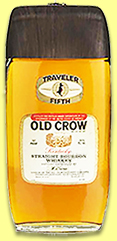
Old Crow ‘Traveler Fifth’ (86 proof, OB, Kentucky straight bourbon, 1960s)
An extremely famous flat bottle, supposedly designed to fit into any slim briefcase, very much in the style of a young executive spending his life shuttling between two airports. I should remind you that 86 US proof means 43% vol., strength levels that were fairly typical of bottles rather intended for Italy. Right then, to be honest, we are not exactly expecting miracles here… Colour: gold. Nose: yes yes yes, this is lovely, very floral, marked by the rye, but also the maize, rye bread, dried flowers, everlasting flowers, menthol cigarettes, mead… This really is a very pretty nose. Tell me, what if flat bottles were actually better suited to perfect preservation? Fifty years of business to rethink… (only joking). Mouth: but yes, this is very good indeed, excellent even, floral, with magnificent spices, firm honey (chestnut, heather) and all manner of toasted and roasted nuts. Finish: long, drier, more on cocoa and tobacco. And very lovely it is too. Comments: but what a surprise! One could almost feel like taking the next Pan Am flight from Paris to JFK. Pan Am, do you remember?
SGP:561 - 89 points. |

|
Eagle Rare 12 yo (47.5%, OB, Kentucky Straight Bourbon, +/-2025)
So here we are at Buffalo Trace, as it would seem that this 12-year-old was first released last year. This may therefore be the very first batch we have before us… Colour: deep gold. Nose: geraniums, lavenders, dark honeys, it is all there, almost thick on the nose even. There is quite a spectacular molasses and rum side, truth be told. Mouth: fresher and more taut, more peppery too (pepper liqueur), then increasingly chocolatey and syrupy. Prunes, hoisin sauce… Finish: long and still rather thick, concentrated, with molasses running riot. Comments: we much prefer the ten-year-old ‘single barrel’, which we find less, how shall we put it, suffocating. But this remains a magnificent whiskey.
SGP:641 - 80 points. |
|
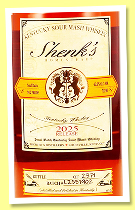
Shenk’s Homestead Sour Mash (45.6%, OB, Kentucky Sour Mash, batch #L25E1902, 2,371 bottles, 2025 release)
It would seem that this sour mash has been partly matured in Vosges oak, that is to say wood cut just next door to WF Towers. It is also supposed to be rather heavily marked by rye. Colour: full gold. Nose: very soft, rounded, without any rough edges, aside from indeed a rather gentle rye. The rest is on fresh breads, particularly seeded loaves of all sorts and kinds. Some nougat too. We find the whole rather restrained, if you see what we mean. Mouth: more presence here, more spices, earthiness, faded flowers… yet it remains globally quite soft and discreet. The Vosges oak does not seem to have truly taken control, even if some peppery notes appear keen to gain the upper hand. Finish: medium length, with some unexpected varnish notes, at least at this stage. The aftertaste is truly dry and spicy. Comments: this is very much a matter of casks.
SGP:551 - 83 points. |

|
Tennessee 15 yo 2011/2026 (56.4%, Wu Dram Clan, The Liquid Crew)
This can only be George Dickel, and that is certainly not bad news. Colour: gold. Nose: it is all here, peanut butter, popcorn, vanilla cake, burnt wood, coffee fudge… With water: and nougat, of course, along with wafts of pot-pourri. Mouth (neat): very good, earthy and spicy, on lavender and rye bread, plus some Italian bitters. At cask strength, this delivers rather well. With water: closer to the cereal and eau de Cologne, but in a measured and elegant manner. Finish: fairly long, fragrant, almost oriental. Little touches of rose water. Comments: this is fresh, light, elegant, unpretentious and very good.
SGP:541 - 85 points. |
|
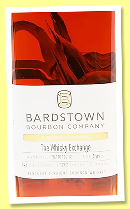
Bardstown Bourbon Company 8 yo (64.6%, OB, The Whisky Exchange exclusive, Single Barrel Bourbon, 2026)
We shall admit it without shame or regret, we had never heard of the Bardstown Bourbon Company before. But the ‘TWE’ stamp is more than enough for us… Colour: deep gold. Nose: nougat, vanilla and popcorn. This is a very light nose, very ‘kind of superficial’, yet without that being a flaw, quite the opposite in fact. With water: acacia blossom and courgette flowers, even a few touches of cauliflower. Mouth (neat): fresh and cheerful, not especially deep on the palate either, but spritzes and fruit juices work rather well. A tropical cocktail of papaya and coconut milk, we are very close to a Scottish grain whisky. With water: much the same. Very light touches of redcurrant juice with honey. Or something else perhaps, coconut is ruling the roost. Finish: medium in length, on a very light texture, with vanilla and coconut. Comments: we have not checked, but it does feel largely dominated by maize. Let us say it, it rather feels like North British.
SGP:630 - 81 points. |
We’ll round off this little transatlantic journey by heading right to the far end of the West Coast, if that suits you… |
|
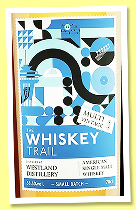
Westland 9 yo (56.5%, The Whiskey Trail, Elixir Distillers, peated American single malt, first fill bourbon barrels, 817 bottles, 2025)
This should, we agree, have absolutely nothing to do with everything that came before. Colour: gold. Nose: what we sometimes used to call green peat, in any case grassy, close to what one might get from burning hay rather than wood, without even bringing peat or coal into the matter. But there is a very lovely medicinal side, close to eucalyptus but also natural rubber and root vegetables, celery in particular. Did you know we were President of the Celery Club of France? (come on, S.) With water: rubber (or rubber tree) takes control. It reminds us somewhat of certain cachaças, seriously. Mouth (neat): here we are much closer to Scottish peats, but with a minty and lemony side that is still rather uncommon. Medicinal peat, very dry. With water: very good, just a little dominated by the cask. Typical post-Covid malt (what?). Finish: long, dry, truly bitter, but nicely salty in the end. Comments: a combative Westland, one that does not let itself be pushed around.
SGP:373 - 84 points. |
Well, it was the oddly flat Old Crow that sort of came out on top, which still surprises us a little. Perhaps good old OBE shows through more clearly in a flat bottle, indeed? In any case, one can’t help wondering whether, with the current glut, quite a few people shouldn’t be rushing to re-rack into inactive casks, cognac-style (refill casks / fûts roux). Assuming, of course, that would be legal… Very active casks (and low ages) may well start to become a thing of the past… (and frankly, we’re not complaining!) |
(Also, vielen Dank for the 'flat' one, Sebastian!) |
| |
April 2, 2026 |
|
|
It seemed only right that I should try to make amends for our rather pitiful April Fool’s joke yesterday, about which I am absolutely certain no one was taken in… were they? If that did happen to be the case, I offer my sincerest apologies to WM Cadenhead, to Diageo and Lagavulin, to any auction houses that may have been contacted in the meantime, as well as to the former workers of Malt Mill, assuming there are still a few of them alive and kicking! |
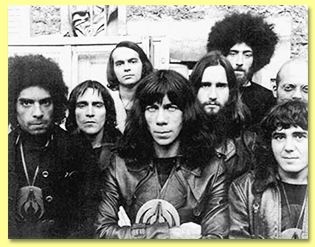
French prog-rock band Magma, early 1970s
(Hey Dave!) |
In any case, the Talisker that follows is very much real, rest assured. In fact, it is being released onto the market today. |
|
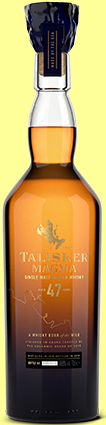
Talisker 47 yo ‘Magma’ (48.8%, OB, 622 bottles, 2026)
This brand new old Talisker was matured in refill American oak hogsheads, then finished for four months in new American oak casks toasted by heated volcanic rocks from the Isle of Skye, instead of open flames. While we know perfectly well that Talisker ages with grace, while also being capable of sheer sublimity at 5 years of age just as much as at… 47 years (indeed, rather like certain Jamaican rums), we’re hoping this ‘Magma’ is cut from the same cloth as the incredible music of the French band Magma, kings of Zeuhl music. Check them out! Colour: deep gold. Nose: it is impressively fresh. We do not, naturally, find any volcanic or basaltic notes as such, as one might for example in the Rangens de Thann from Zind-Humbrecht, but this gentle brine interwoven with guavas and pink grapefruits is quite extraordinary. It then becomes more medicinal, I was almost going to say more ‘Talisker’, with embrocations and massage balm, a little in a Thai style. Then come the winkles and small oysters, reminding us that the distillery sits by the sea, not forgetting a few little touches of pink pepper. Mouth: once again, it is astonishingly fresh, with a dial that has been set exactly where it ought to be, between seawater and pepper on one side, and exotic fruits, especially citrus, on the other. A sort of camphory mint comes along to complete the whole structure which, incidentally, also becomes increasingly saline and smoky as the minutes go by. Careful though, the drinkability index is very high. Finish: long and more resinous, still camphory, with bitter almond and a few drops of olive oil, beyond a smoke that remains, all in all, rather gentle. The soft pepper comes back with a vengeance in the aftertaste and reminds absent-minded (or over-talkative) drinkers that what they have in their glass is indeed Talisker. Comments: entirely on the level of the Glacial Edge or the Prima & Ultima from three years ago, which is to say superlative. I think we may open the betting, how long can these casks keep going? Sixty years? Seventy-five years? You say even more?
SGP:653 - 93 points. |
March 2026
 |
Serge's favourite recent bottling this month:
House of Hazelwood 36 yo ‘Queen of the Hebrides’ (43.4%, OB, The Legacy Collection, Islay blended malt, 274 bottles, +/-2024) - WF 92
Serge's favourite older bottling this month:
Balvenie 1965 ‘Over Proof’ (2.0 over proof, Robert Watson of Aberdeen, 26 2/3 fluid ozs., +/-1975) - WF 90
Serge's favourite bang for your buck this month:
Talisker 12 yo 2011/2024 (48.4%, Douglas Laing, Old Particular, Fanatical about Flavour, L19637, 150 bottles) - WF 91
Serge's favourite malternative this month:
Caroni 24 yo 1996-2019/2024 (62.4%, Velier, Rum Paradise #6, Trinidad, heavy, cask #5619, 115 bottles) - WF 93
Serge's thumbs up this month:
Auchroisk 34 yo 1991/2025 (44.4%, The Maclean Foundation, virgin oak, cask #572002, 248 bottles) - WF 90
Serge's Lemon Prize this month:
The Ileach ‘Ruby Port’ (48.5%, OB, for Germany, cask #25/0032) - WF 65 |
We would like to remind you
that we do not take prices
into account, except for the
“bang for your buck” category. |
| |
April 1, 2026 |
|
|
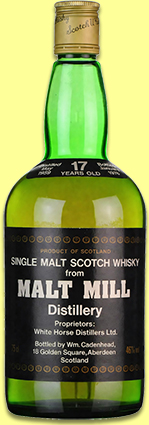
Tasting Malt Mill,
once more
Well, this is rather something. One had thought that the era of miraculous old-whisky discoveries, dusty Springbanks behind coal bunkers, pre-war blends under chapel stairs, forgotten flagons in Highland solicitors’ cupboards and the like, was now largely behind us.
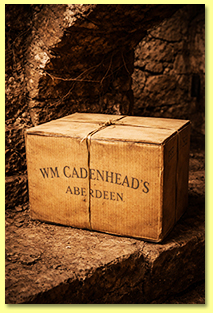
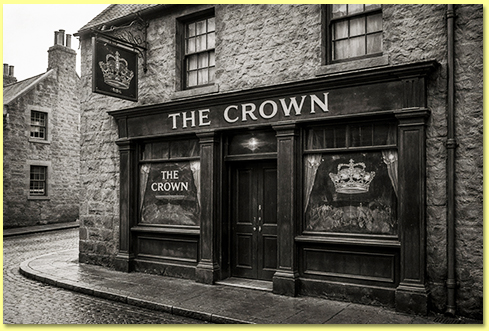
And yet, here we are. A full case of six bottles of Malt Mill 1959 has just been discovered in the cellar of an old pub in Aberdeen, closed for at least thirty years and, one suspects, not exactly maintained in expectation of future archaeological interest. Quite how the case survived untouched for so long is anyone’s guess. Perhaps nobody knew what it was. Perhaps everybody knew exactly what it was. In whisky, both explanations are equally plausible. |
|
 |
|
The condition is nothing short of remarkable. The labels are beautifully preserved, the twist caps reassuringly intact, and while the levels are a little low (roughly top shoulder) one would be inclined to call that entirely honourable for bottles of this age. Frankly, if they had all been into the neck, one might have started worrying for entirely different reasons. Now, the truly delicious part: there are increasing indications that this Malt Mill 1959 may never actually have been commercially released. Not “very rare”, not “hard to find”, not “only seen in Japan in the early 1980s”, but possibly never released at all. Which would place it in that most dangerous of categories: whiskies that make collectors weak at the knees, auctioneers strangely lyrical, and otherwise sensible adults start using words such as “unicorn” without irony. |
The story, as relayed by the heirs of the late publican, is that the case had lain undisturbed in the pub’s lower cellar for decades, in the company, one imagines, of mouldy ledgers, dead spiders, a few heroic cobwebs and perhaps the occasional regrettable bottle of 1970s advocaat. One bottle was eventually opened, and one can only hope this was done with the appropriate combination of reverence, greed and panic, and a sample was sent forthwith to Whiskyfun for evaluation. And naturally, we sprang into action with our usual sense of selfless amateurism. Some burdens one simply has to bear. |
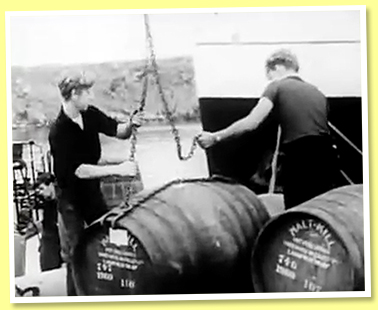
Casks of Malt Mill being loaded onto the puffer 'Pibroch' in the late 1950s or very early 1960s. Screen capture from a stunning documentary from Scottish Television. Check '
Islay Whisky Island Documentary' on YouTube. |
 |
As for the five remaining bottles, it would be foolish to pretend that one could estimate their market value with any serious confidence. Ghost distillery, 1959 vintage, immaculate provenance, possible unreleased status, and a story involving a shuttered Aberdeen pub? Frankly, the only honest valuation at this stage is: too much. Still, do keep an eye on the auction houses over the coming months, where one suspects these survivors may soon reappear beneath flattering lighting, breathless catalogue prose and estimates designed to make one briefly reconsider the utility of internal organs. |
But all that can wait. The important question, as always, is not how much it might fetch under a hammer, but whether the old beast still has it where it counts.
Let’s see. |
|
|
Malt Mill 17 yo 1959/1976 (80° proof UK, Cadenhead, Black Dumpy, green glass)
A very smoky old ghost, from the kingdom of old-style peat and impossible things. The only other Malt Mill we've ever tried was a miniature of another 1959 from James MacArthur, in 2018 (WF 91). Colour: deep old gold, bordering on polished walnut and antique Sauternes. The hue of a forgotten violin, a chapel candlestick, or some priceless liqueur that has spent half a century avoiding vulgarity. Nose: extraordinary. Not merely smoky, cathedrally smoky. This is not peat as a flavouring, nor even peat as a style marker; this is peat as architecture, as weather, as ancestral memory. One is immediately confronted with old kiln smoke, damp coal cellars, soot-blackened stone, hessian sacks, paraffin, camphor, embrocations, old fisherman’s jumpers, and the smell of extinguished turf fires after Atlantic rain. Then it unfolds, and unfolds magnificently. Smoked walnut oil, black olives in brine, tarred ropes, antique toolboxes, cigar humidor, old books left in a seaside rectory, dried kelp, iodine, and the faint medicinal whiff of a 1950s chemist’s shop. There’s also that magnificent old-whisky paradox: beneath all the smoke and oils, an almost indecent elegance. Beeswax. Furniture polish. Crystallised orange peel. Tiny raisins. Seville marmalade on rye toast. Bitter chocolate infused with lapsang souchong. With time, it becomes almost absurdly complex. Charred rosemary, graphite, eucalyptus, shoe polish, smoked chestnuts, bouillon, truffle peelings, and then, from nowhere, tiny high notes of old yellow Chartreuse, preserved lemons, verbena, and dried mint. It is as if some forgotten Victorian apothecary had been set on fire in the most civilised manner possible. |
With water: utterly majestic. Water does not diminish it; it liberates it. The smoke becomes more mineral, more chiselled, more coastal. Wet slate, crushed oyster shells, kippers in a silver dome, old engine oil, beach bonfire ashes, and a little coal dust. One also finds lanolin, sheep wool, and old tweed drying near a peat hearth. It gains a stunning “old Islay library” profile, if such a thing exists, and if it does, one would very much like the keys. Mouth (neat): oh, this is monumental. The arrival is dense, oily, and almost shockingly alive for such an old spirit. It doesn’t so much land on the palate as march across it in military boots dipped in tar. Enormous peat smoke, naturally, but not simple phenolic aggression, rather an old-world, resinous, earthy, medicinal peat, with astonishing tertiary depth. Tar liqueur, bitter herbs, black tea, old Pu-erh, cough syrup, liquorice root, clove cigarettes, pine resin, walnut skin, and salted liquorice all arrive in waves. Then come salted lemons, anchovy paste, bouillon, tobacco leaf, cracked black pepper, old leather, and smoked game. One keeps expecting the old age to have sanded away the structure, but no, it is still standing ramrod straight, like an elderly admiral who can still outdrink everyone in the room. And then, because whiskies of this sort are never content with one register, it begins to show little flashes of fruit and nobility: quince jelly, dried apricot, blood orange, over-steeped bergamot tea, and perhaps a touch of mango chutney gone gloriously savoury. There’s also a faint earthy sweetness, molasses, dark honey, pipe tobacco, but every time sweetness threatens to become central, the smoke returns and politely but firmly restores order. With water: a total old peat opera. It broadens and deepens, becoming even more saline, earthy, and medicinal. Camphor, eucalyptus lozenges, smoked tea, coal smoke, dried seaweed, and old-style herbal bitters. There is also a glorious umami side now, mushroom stock, game jus, smoked soy, marrow broth. One could almost eat this with a spoon, though that would probably be sacrilege. It also turns more “mechanical” in the noblest old-whisky sense: copper coins, mineral oil, old toolbox, warmed Bakelite, and a suggestion of antique machinery in a damp warehouse by the sea. Which sounds preposterous, but there it is. Finish: very long. In fact, almost suspiciously long, as if it had no intention whatsoever of leaving. The peat persists in dignified, old-fashioned layers: ash, coal smoke, tar, black tea, salted liquorice, menthol tobacco, and embers dying slowly in wet wind. A little citrus bitterness remains too, grapefruit pith, marmalade, preserved lemon , along with walnut oil and a final whisper of medicinal herbs. The aftertaste is gloriously old-school: smoky, dry, oily, slightly bitter, faintly salty, and profoundly aristocratic in its refusal to flatter. Comments: this is not simply a great old smoky whisky. It is one of those spirits that seem to have escaped from another civilisation altogether, one where malt was dirtier, peat was louder, warehouses were colder, and nobody had yet thought to make whisky “approachable.” It is gloriously uncompromising, deeply tertiary, and utterly haunting. There is a kind of grandeur here that modern peat almost never reaches: not just smoke, but old smoke, layered with waxes, oils, herbs, medicines, salts, books, cellars, and all the glorious detritus of age. A whisky that smells and tastes like memory set on fire.
Not for everyone, naturally. Which is exactly why it is so wonderful (Serge!).
SGP: 478 - 97 points. |
|
|
| |
|
|
| |
Best spirits Serge tried those weeks, 90+ points only
Ben Nevis 27 yo 1997/2024 (48.2%, The Collaboration, Whiskshop Neumarkt, Switzerland, 258 bottles)
Ben Nevis 1970/1996 (53.1%, OB, cask #4534, 238 bottles)
Benrinnes 1974/1987 (56.2%, Scotch Malt Whisky Society, #36.1)
Ledaig Tobermory 14 yo 1973/1987 (40%, Sestante)
Ledaig 19 yo 2005/2025 (65.5%, Scout Drinks, butt, cask #900002, 170 bottles)
Talisker 47 yo ‘Magma’ (48.8%, OB, 622 bottles, 2026)
Chollet ‘Humus Noir - Lot 19.84’ (45.1%, Malternative Belgium, Bons Bois, 99 bottles, 2024)
Giboin 2001/2026 (58.4%, OB for Korea Brandy Society, Borderies)
Marie Foucher ‘Lot 19.79 Le Prullepie’ (54.1%, Malternative Belgium, Fins Bois, 366 bottles)
Jean-Luc Pasquet ‘Le Cognac de Joël - Lot N°88/82’ (49.2%, OB, Grande Champagne, 348 bottles)
Jean-Luc Pasquet ‘L79’ (49.1%, Swell de Spirits, Wild Card #6, Petite Champagne, 2025)
Prunier 1979 (53.7%, Ferrer, Collection Dame Jeanne, Petite Champagne, +/-2026)


|
| |
|
|